January 31, 2016

Todd Dresser, Courageous Visionary

Todd Dresser, CHMM, TURP, Nashua, NH, excels at managing the risks as well as the politics and psychology of hazards in schools and communities. He is a Senior  Project Manager at Hydro-Environmental Technologies, Inc. (HETI), Acton, MA.  


Todd is widely admired for making it easier for people to do the right thing. He is a master at communicating the benefits of safety and sustainable principles and changing the mindset from resistance, avoidance and “waiting to get caught” to eagerness for technical assistance.

Todd emphasizes “lessons learned” in his professional consulting work, his public advocacy, and in his publications, training and teaching. He is known for his extensive knowledge, expertise, and field experience in hazard analysis and mitigation, site assessments, industrial hygiene, pollution prevention, brownfields, occupational health and safety, and emergency plan review and development.

Environmental Health as a Public Service   

Barnstable County Environmental Health Specialist Marina Brock calls Todd “a courageous visionary.

As an environment management professional, Todd has always acted as the eyes and ears as well as the voice of the community whether the issue is water quality, waste site cleanup, emergency response, or school environmental health and safety. He is dedicated to promoting accident prevention and risk minimization, to correcting deficiencies in operations, and to helping people learn from mistakes.

For over twenty-five years, Todd has built a track record of success helping companies and municipalities improve compliance and safety. Using terms such as “resource management,” he keeps a strategic focus on aligning “compliance” with the bottom line. He offers companies ways to increase efficiency, meet regulatory requirements and become more competitive while reducing risks to workers and the community. He connects companies and community members with similar needs and promotes positive relationships and trust between companies and agency personnel.

“The key to my success has been my ability to break large complex problems down into smaller manageable tasks which has allowed me to make incremental improvements.”  

Todd helps business see that some materials considered waste have value and can be sold. He helped one company market one of its hazardous waste streams to a second facility that could use the material is an ingredient for one of its products.  This allowed the first company to eliminate the disposal cost for this waste while also reducing its regulatory responsibilities.

A second firm benefited by obtaining a product input at a lower cost from an in-state source.  This saved money for both firms and prevented pollution be extending the useful life of the solvent and decreasing the need for transportation.  This was a win for both businesses and the Commonwealth of Massachusetts.

Public Advocacy
As an environmental engineer for the Burlington (MA) Board of Health from 1991 to 2004, Todd worked on a variety of challenges including 160 hazardous waste sites and serious school indoor air quality problems. He discovered he loved public advocacy.

One of the political realities of conservation and environmental protection is that municipal boards are often connected to developers. They may be unaware, indifferent or even hostile to environmental risks or health concerns.

In one case, developers and the municipal officials planned to build a golf course on a 350 acre parcel. In order for the community to operate and maintain the golf course, the town would have had to install and fracture a series of bedrock wells to supply water to the new course. The site was located adjacent to an industrial park that contained numerous chemical spill sites. As a result, the new well would likely have captured and re-located contaminants from 15 to 20 nearby plumes. This could have created significant financial liability for the community. Todd spoke up at town meeting to explain the risks of the project. It was an uncomfortable presentation but it got the community’s attention. They didn’t build the golf course.

Protecting Community

Todd knows that community residents may have unrealistic expectations when they think that local municipalities have Emergency Plans and are prepared for industrial accidents that might threaten the community. People often assume that their local officials know about the risks and are prepared to respond to any accidents.

“In reality,” says Todd, “most don’t know and/or don’t care. The sad reality is that, in many places, Emergency Plans don’t exist. Most officials are not qualified technical experts to complete the hazards analysis and to manage hazards. They do not monitor for problems with infrastructure or old contaminants.”

In 2000, the US EPA Region 1 presented Todd and the Burlington Board of Health an EPA Merit Award for its innovative Universal Waste Recycling Initiative for reducing the amount of mercury and heavy metals in the waste stream. It was a model for other communities.

The scope of Todd’s dedication to pollution prevention extends statewide and beyond.  In the late 1990s Todd and Marina Brock won grants from the Toxics Use Reduction Institute (UMass/Lowell) to create programs for municipal officials, health agents, public works, police and fire departments in chemical safety and emergency planning.  (Also see Marina Brock’s article: Impediments to Implementing P2 in Public Schools.)   

Todd’s environmental awards and recognition, in addition to the EPA Merit Award, include three Massachusetts Governor’s Awards for Outstanding Achievement in Toxics Use Reduction, and recognition by the Ford Foundation and the Harvard School of Government for Excellence in American Government.

Changing the Status Quo

“I love working in academic environmental health and safety because often times no one speaks for the students or wants to address known safety issues. The status quo is simply the easiest path.”  

 Indeed, few parents imagine that their children are in harm’s way at school from old stockpiles of explosives and flammables in classrooms, labs, closets and storerooms. Many parents would be surprised to learn that many schools do not teach safety nor teach safely, even in science and vocational classes.

 A case in point is Burlington High School where students and teachers were suffering mold-related symptoms  Members of the Board of Health were turning a blind eye to the conditions that included water infiltration, wet carpet, holes in the ceiling, barrels of moldy water, a poorly designed and poorly maintained ventilating system.

Concerned parents started calling the media and the state health department for help. After a chemical fire in a storage area Todd found serious chemical hazards throughout the school including unsecured chemical storage in the classroom, open chemical containers in boiler rooms and  maintenance areas, and the joint storage of incompatible substances in classrooms and maintenance areas.

“My inspiration is my dad who was an engineer. He died at age 55 due to occupational exposure. I was motivated to act In Burlington because I was disgusted by the problems I found and by the fact no one cared enough to try to improve things.”

After US EPA and state health department experts came out, the school system learned it would take $1.5 million to fix the problems.

While attempting to research and resolve the schools IAQ problems, Todd noted a lack of readily available guidance for identifying school environmental health and safety issues as well as a reluctance of regulatory agencies to get involved with school issues.

Documenting Success 

So Todd wrote a comprehensive analysis of the hazards, their contributing causes, and his recommendations for corrective action, "A Case Study of Environmental, Health and Safety Issues Involving the Burlington, Massachusetts Public School System Indoor Air Quality." It is a guide for parents, school staff, and public officials everywhere.

He wrote, "A significant problem noted was that no one employed by the school system had been assigned the task or made accountable to investigate or resolve environmental, health and safety concerns or complaints. As a result, such complaints were either ignored, disputed or referred to a consultant for resolution without  consideration for the original cause. This resulted in the long term persistence of many hazards."

“Even though some of the anecdotes I will report may suggest otherwise, our story is a success story in that we have made the effort to identify the concerns and to take action to correct the problems.”

 The challenge can be professional as well as personal. In another school district, at the parents’ open house night, Todd saw the chemistry teacher do the dangerous woosh bottle demonstration, where a volatile flammable liquid was detonated in a 5-gallon water bottle as a demonstration of “fun with chemistry”. Fire officials define this as the detonation of an improvised explosive device in a place of public assembly because this demonstration routinely results in flaming liquids and shrapnel being projected into the observers. 

Concerned, Todd shifted into professional mode. Although the school was only three or four years old, he noted the cabinet shelves in the chemical storage room were heavily corroded signaling a serious lack of ventilation and knowledge about hazards material management. Todd went to principal to share his Burlington School Case Study. And, even though Todd was a consultant for the Massachusetts Department of Environmental Protection, the school stalled at providing a chemical inventory. Eventually, the fire marshal found five fire codes violations.

Safety First

The importance of safety has been a theme of Todd’s life. Todd studied at Bowdoin College where he received a Bachelor of Science Degree in Biology. Later, he earned a Master of Arts Degree in Environmental Biology from Hood College with a concentration in toxicology.

 After college he went into the army where people with an interest in science and talent got resources and support. As a biological researcher in the US Army Biomedical Research & Development Laboratory, he planned and conducted aquatic toxicological research to validate the effectiveness of a rapid screening test.

Todd chose to screen four solvents that are commonly used in industrial and pharmaceutical applications for toxicological and teratogenic impacts (birth defects). He learned it didn’t take much to screw things up.

At the age of 23, he published and presented findings to the Society of Environmental Toxicologists and Chemists, and published his findings in the Journal of Applied Toxicology. (Teratogenic Assessment of Four Solvent Compounds using the Frog Embryo Teratogenesis Assay-Xenopus (FETAX), Journal of Applied Toxicology Volume 12, Issue 1, pages 49–56, February 1992.)  

After the army he worked for private industry conducting superfund site investigations and quality assurance work for EPA and state environmental agencies. He gained insight into the politics of regulation. ”It was a great training ground.”

More recently, as a teacher of Environmental Science at Nashua Community College, Todd has enjoyed helping his students understand how environmental management and regulatory standards affect them. His students prepared maps with their house in the bull’s eye and then asks them to find information from the US EPA website such as Local Environmental Indicators Reports, Toxics Release Inventory for Communities and the Environmental Health Resources for Community Members.  

In His Own Words

Todd is also a writer. Throughout his career, Todd has written articles, reports, guidelines, and case studies about his school and community pollution prevention activities and hazard management projects. As a result, we can see the world through his eyes. We feel his extraordinary commitment to excellence, to safeguarding our families, schools, workplaces and communities and to educating us all to be partners in the work of responsible stewardship of our precious resources.

Publications, Todd H Dresser

A Case Study of Environmental, Health and Safety Issues Involving the Burlington, Massachusetts Public School System Indoor Air Quality, Todd Dresser, 1998.
  • A synopsis of my investigation of various indoor air quality issues plaguing the Burlington school district.  The document also offers a number of tips, suggestions and lessons learned that can help guide other schools seeking to evaluate IAQ issues within their district.

A Case Study of Environmental, Health and Safety Issues Involving the Burlington, Massachusetts Public School System (ERIC, Institute of Education Sciences)
  • The complete school EHS case study. It reviews the 20 major issues Todd  evaluated at the Burlington School district.  Each section describes methods and observations. It also offer tips, suggestions and lessons learned for each topic.

LinkedIn posts
Site Plan Review Can Be Tool to Protect Public, Todd H. Dresser, Page 11; Concerted Effort Needed to Reduce Health Risks at School, Marina Brock and Todd H. Dresser, page 14; Town Program Helps Businesses with Environmental Management, Todd H. Dresser, Page 20.   

Todd H. Dresser,  Edna R. Rivera,  Florence J. Hoffmann and  Robert A. Finch*    Teratogenic Assessment of Four Solvent Compounds using the Frog Embryo Teratogenesis Assay - Xenopus (FETAX), Journal of Applied Toxicology, Volume 12, Issue 1, pages 49–56, February 1992. Copyright © 1992 John Wiley & Sons, Ltd.  (Article first published online: 11 JAN 2006  DOI: 10.1002/jat.2550120111)

Rick Reibstein, Prevention First

Rick Reibstein is a life-long pollution prevention champion promoting innovation and transformation.

Rick is on the Faculty of Harvard Extension School and a Lecturer in Environmental Law at Boston University where he is the co-creator of the Regulated Community Compliance Project (RCCP). RCCP focuses on the relationship between government and the regulated community. It has provided training for over 3,000 real estate professionals on the lead disclosure rule and related regulations.
 
Protection Starts with Prevention

From 1989 to June 2015, Rick was a Senior Environmental Analyst at the Office of Technical Assistance (OTA) in the Massachusetts Executive Office of Environmental Affairs. OTA provides free confidential on-site technical assistance to manufacturers, businesses and institutions to reduce the use of toxic chemicals, energy and water.


OTA was created by the 1989 Toxics Use Reduction Act.  “In my opinion the Massachusetts Toxics Use Reduction Act is the best environmental law ever passed,” says Rick. “It created the Toxics Use Reduction Institute at UMass/Lowell and its sister, the Office of Technical Assistance (OTA).

Persistent Assistance and Willing Compliance

Rick believes that typical agency enforcement, while necessary, creates an adversarial relationship. At OTA, Rick practiced persistent assistance, a strategic approach to helping businesses and communities learn about the laws and reduce hazards by identifying opportunities to adopt safer materials and processes that cost less to use and manage.

The Source Reduction Model of Inquiry

Rick was among the first in the country to do on-site visits for pollution prevention, emphasizing  the importance of helping companies find the best, most efficient environmental options without telling them what to do.  “As I worked with companies, I learned I just needed to ask questions, not prescribe solutions.“

He focused on educating, training and demonstrating alternative technologies. He promoted the benefits of the “practice of compliance” with regulations and meeting standards set by such laws as the Clean Water Act, The Clean Air Act, and rules for hazardous waste management.  He taught that source reduction and other pollution prevention strategies avoided costs, reduced liability, avoided fees and penalties.

High Rates of Willing Compliance

By helping companies and communities to feel safe about reaching out and helping them meet regulations and standards Rick and his co-workers achieved high rates of willing compliance. Compliance rates increased more than 50%. “It was proof that a government program can have great results.”

OTA has worked quietly with about 2000 companies who voluntarily sought OTA assistance and site visits. In contrast with enforcement which often achieves minimum change, Rick calls OTA’s approach “relational environmental governance,” building relationships and trust. A former Secretary of Environmental Affairs called OTA the “state’s best kept secret, the crown jewel of government."

In Good Company

Rick is grateful to OTA’s first director, Barbara Kelley, for her vision of working collaboratively with the regulated community. Others, such as former Commissioner of the Department of Environmental Management Jim Gutensohn and division director Michael Brown, deserve recognition for prompting the new approach. There was also Ken Geiser, creator of the Toxics Use Reduction Act, Lee Dane, who oversaw the first assistance pilot program, and consultant Robert Pojasek, a pioneer in pollution prevention, who helped Rick understand how to do the work.

Childhood Values

“Being taken on hikes in the Catskills and New Hampshire as a child made me want to be in nature. I came back to school drawing pictures of mountains and trees.  My friends drew pictures of warplanes, ships and battles."

“My mother was an inspiration to me. She worked for the city of New York and did policy research and economic analysis. She predicted that the policy of deinstitutionalizing mental patients would lead to many homeless in the streets. She was right. She worked for years to get the city to recognize that it was not getting its full medicaid reimbursement. When the story finally broke, it was front page news. She didn’t get public recognition but she made such a big difference.”

His mother’s career gave Rick an appreciation and tolerance for the challenges of public service.  “I cared that she won the respect of all her co-workers and did work of excellence and impact.”

He saw that doing the kind of work that helps people and communities is tremendously satisfying and that leading an ethical life is a source of “happiness. The other motivating force was my mother getting cancer, her sisters dying of cancer, and others around me having cancer.”  

Education for Innovation and Transformation

Rick attended Hampshire College with an interest in science and art. He made sculpture out of waste metal. He changed to a focus on the environment, energy and transportations systems. He researched alternatives to nuclear power and fossil fuels, and how to influence attitudes to prompt change. He graduated with a degree in “Creative Writing in the Public Policy of Science.”

Rick got his JD at Brooklyn Law School. In 1979 he was inspired by hearing a young Amory Lovins, cofounder of the Rocky Mountain Institute (www.rmi.org), whose talk on the “Soft Path” went up against a group of highly respected authorities and was entirely convincing.

Breaking the Silence

Rick’s first  job in government was in the state budget office reviewing environmental programs. Next he investigated PCBs in public buildings such as prisons and community colleges. He found serious problems and wrote a report directing attention to violations of environmental rules in state facilities.

He pointed out that the federal Toxic Substances Control Act required immediate public notification and containment. It shook people up. Taking responsibility for the condition of state buildings was an uncomfortable new idea to engineers and agency administrators. When Michael Dukakis was Governor, there was a heightened awareness of the Commonwealth’s accountability.  

Rick brought the concept of legal compliance to the table.

Rick’s formation of an interagency committee was supported by his supervisor. Members of the Departments of Health, Environmental Protection and Transportation enthusiastically participated. They supported Rick’s report on the need to better manage hazards in state facilities. The Executive Office of Administration and Finance asked how much it would cost to address the environmental impacts of state agencies.

Attorney General Harshbarger forced cleanups under the federal Resource Conservation and Recovery Act (RCRA), the public law for the proper management of hazardous and non-hazardous solid waste. (However, eventually new leadership came in and disbanded the committee.) However, Rick was later able to reestablish a team that provided assistance to state agencies in improving their environmental performance. This has evolved into the Lead by Example Program to address greenhouse gas emission reductions, energy conservation and efficiency, renewable energy, green buildings, and water conservation.


Promoting School Chemical Clean Outs

In 1993, OTA staff and community health agents such as Marina Brock, Barnstable County Environmental Health Specialist, did a series of school visits and discovered a high quantity of hazardous chemicals and unsafe chemical storage in schools.   

They found that school officials were often reluctant to acknowledge the hazards. Rick got a grant from the US EPA to fund an OTA initiated project, Chemical Use Reduction for Indoor Air Schools (CURIAS) (infohouse.p2ric.org/ref/16/15185.pdf). The program linked chemical use to poor indoor air quality and promoted chemical clean outs.  (See “Impediments to Implementing P2 in the Public Schools, Marina Brock, 1994.) 

With the help of Susan Lanza, Rick helped create a unique Mentor Program to match chemistry professionals with schools to clean out chemical stockpiles and set up chemical hygiene programs. Rick also helped form a multi-agency task force on schools create compliance guidelines for a big matrix of indoor air quality and chemical issues.

As an example of what schools can do to improve safety, Rick will never forget what he learned from Monona Rossol,  industrial hygienist and President of Arts, Crafts & Theater Safety, Inc.,. “Don’t just look at general ventilation rates. Ask if the airflow is bringing chemicals into the breathing zone.”

Later, Rick launched programs for environmentally preferable purchasing and trainings for schools, hospitals, and business networks. He received a US EPA grant for OTA to work with regional planning agencies and fire departments on preventive hazards management.
In 2010, RICK created the Massachusetts School Sustainability Coordinators Roundtable  to honor and encourage student volunteers whom he had worked with on greenhouse gas calculations and other campus projects.  He organized the Spring Convocation of Students Working with Sustainability Coordinators.

He also was a founder of the Business Environmental Networks and the National Electronic Products Recovery and Recycling Roundtable that prompted a national effort to address electronic waste. He is a former editor of Hazardous Materials Intelligence Report and the creator and editor of Radiation Events Monitor.
Rick Reibstein.jpeg

Rick was declared a “P2 Champion” of 2015 by the National Pollution Prevention Roundtable (NPPR), the premiere group for pollution prevention (P2) professionals. Rick is on the board of the National Pollution Prevention Roundtable where he has advocated for addressing Toxics in Schools. Photo by Department of Earth & Environment.

Jane Winn, Grassroots Leader
Safeguarding our communities and the ecosystem frequently depends on extraordinary people such as Jane Winn, executive director of the Berkshire Environmental Action Team (BEAT) in Western Massachusetts.


Jane Winn is an inspiring grassroots leader whose extraordinary sense of responsibility, persistence and courage is dedicated to advocacy and stewardship for a safe quality environment. Jane is gifted at building community power to oppose pollution and advance sustainability. She inspires a broad constituency of knowledgeable, caring activists and stewards.

In October 2015 Clean Water Action Massachusetts awarded Jane the John O’Connor Award “For leadership in the fight against the construction of the Kinder Morgan pipeline, continued pressure on gas utilities and expanding labor and community partnerships to the Berkshires."

(John O'Connor, 1955 - 2001, was a founder of the National Toxics Campaign in 1983. He helped lead efforts to pass the Superfund legislation and was author of ''Getting the Lead Out'' and ''Who Owns the Sun?'')

Anything that harms human health will harm wildlife and visa versa.


Jane Winn’s interest in protecting wildlife and the health of natural systems lead to the creation of BEAT. Winn says, “I received my bachelors in biology and masters in zoology, but it was not until we formed BEAT that I really put those degrees to good use.”


“I always loved nature and could never understand why big companies were allowed to pollute our air, land, and water. In college, Rachel Carson’s 1962 book, Silent Spring, made a huge impression on me. I admired Carson’s dedication to speaking out for what’s right.” I grew up on the banks of a very polluted Housatonic River downstream of the General Electric plant. We held our noses going over the bridges. The river caught on fire outside my house one time, and we all went out and breathed in the PCB (polychlorinated biphenols) as we watched.

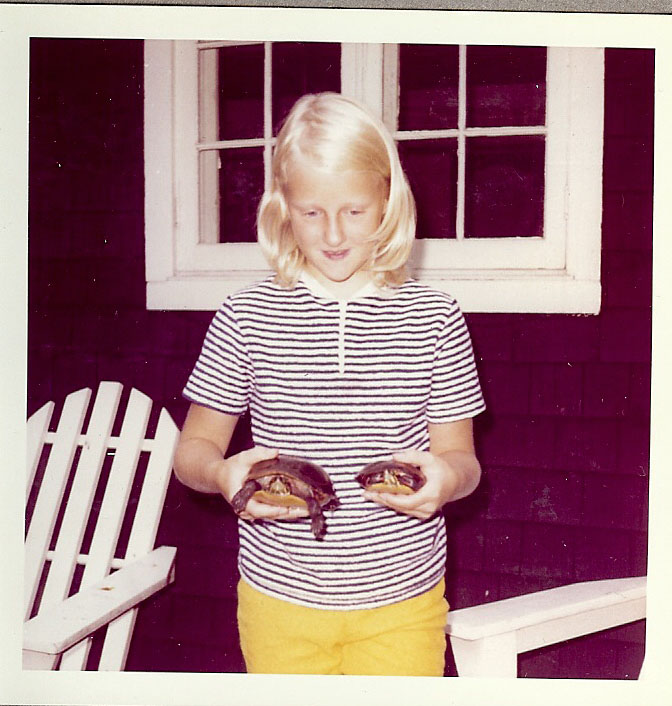
I thought I was good at catching frogs until I went away to camp and found out frogs can really jump.... fast! It is my belief that PCBs depress amphibian and reptile startle response leaving those living in polluted areas seeming lethargic and easily caught.

“We all have our voices. we should be using them.”


“In 2002-2003 a group of us were outraged as we tried to have the Massachusetts Wetlands Protection Act enforced during a proposed construction project and found that the law and its regulations were being ignored at every level.”

“It is shocking how our government, supposedly of the people, by the people and for the people, is nothing close to that. Big monied polluters of all kinds are either above the law or the laws do not exist to protect human and environmental health.”

On the BEAT website is a well-documented in-depth case study. It tells how students, faculty and citizens organized to try to stop the Berkshire Community College’s soccer field that would destroy the hydrology of a vernal pool. Environmental faculty offered to show how to do it right but the BCC administration resisted.


Why was no one was willing to stop project?


Jane learned that every step of the process violated existing regulations including the public records law. The project was out of compliance with standards, regulations and required procedures but there was little enforcement or accountability from the local conservation commission or state agencies. Jane and her colleagues discovered deficiencies with maps, filings, and permits and pointed out discrepancies in the submitted plans that the agency staff didn’t see.

Jane and her colleagues had to keep learning about the law and how to use it. In spite of a hard fought battle, BCC built the soccer fields.

Lessons Learned
 

When a new fracked gas pipeline was proposed for the area, BEAT started holding meetings and giving presentations. In a small town of Cummington (pop. 900), they packed the church hall. People were spilling out into the hallway and adjacent library, and they came from seven counties across the state. The crowd immediately start organizing. Working with Massachusetts’ Clean Water Action and other organization they got thousand of people to call legislators.

Once you realize you can make a difference, it’s addictive.


The lessons the environmental advocates learned in the effort to stop the BCC soccer fields were not wasted. BEAT has organized campaigns against environmental degradation, inappropriate development, habitat fragmentation and other threats to wildlife. As part of the Citizens Coordinating Council, they advocate for higher standards for cleaning up GE’s contamination of the Housatonic River.Through its projects and campaigns BEAT reaches thousands. BEAT monitors, watchdogs, informs, surveys, tracks, educates, trains, organizes and advocates. BEAT has a free weekly newsletter, a website (with a great tutorial on the Wetlands Protection Act among other resources ) and hosts Pittsfield Green Drinks, a monthly gathering of environmentally-minded individuals.

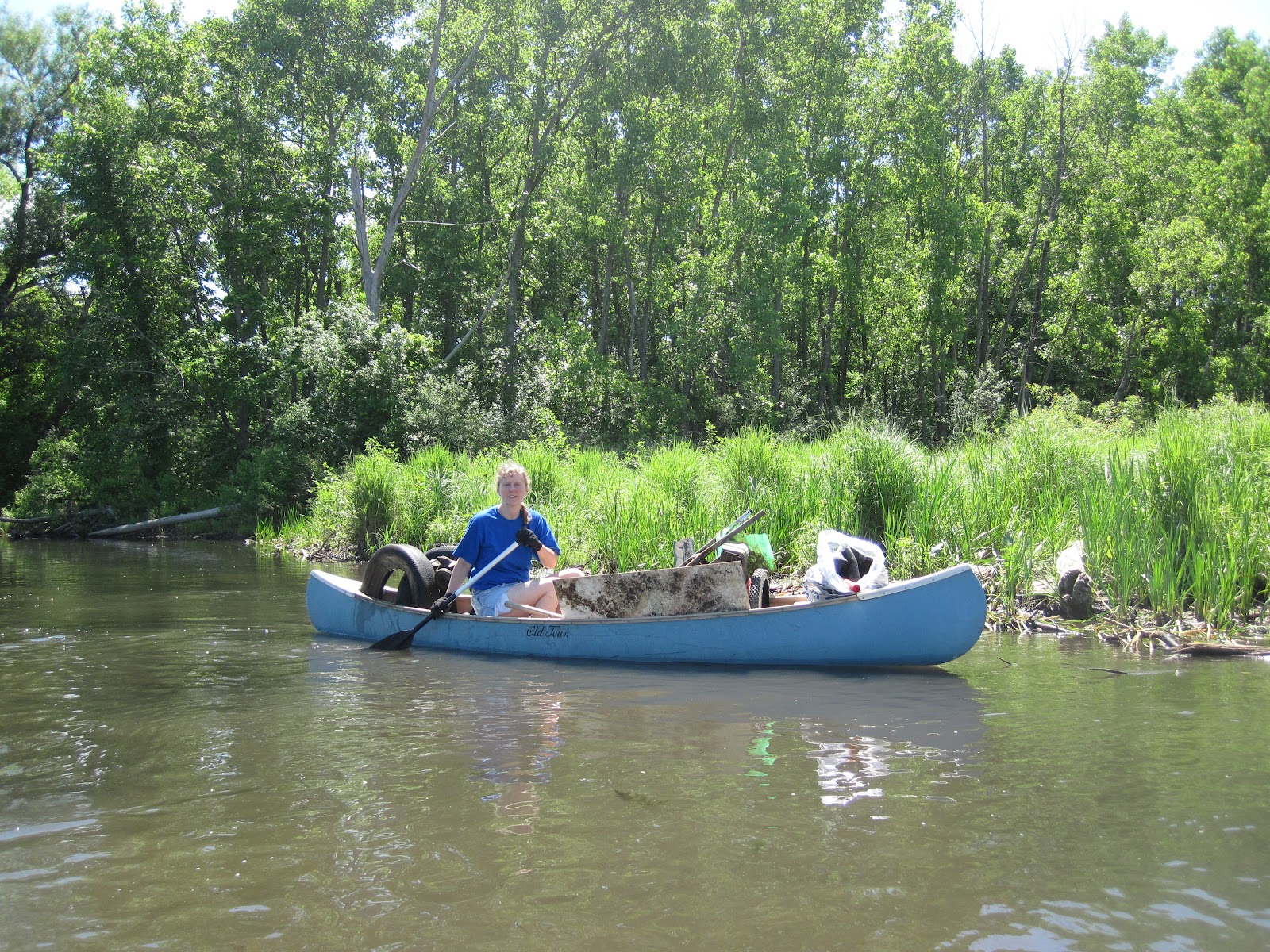
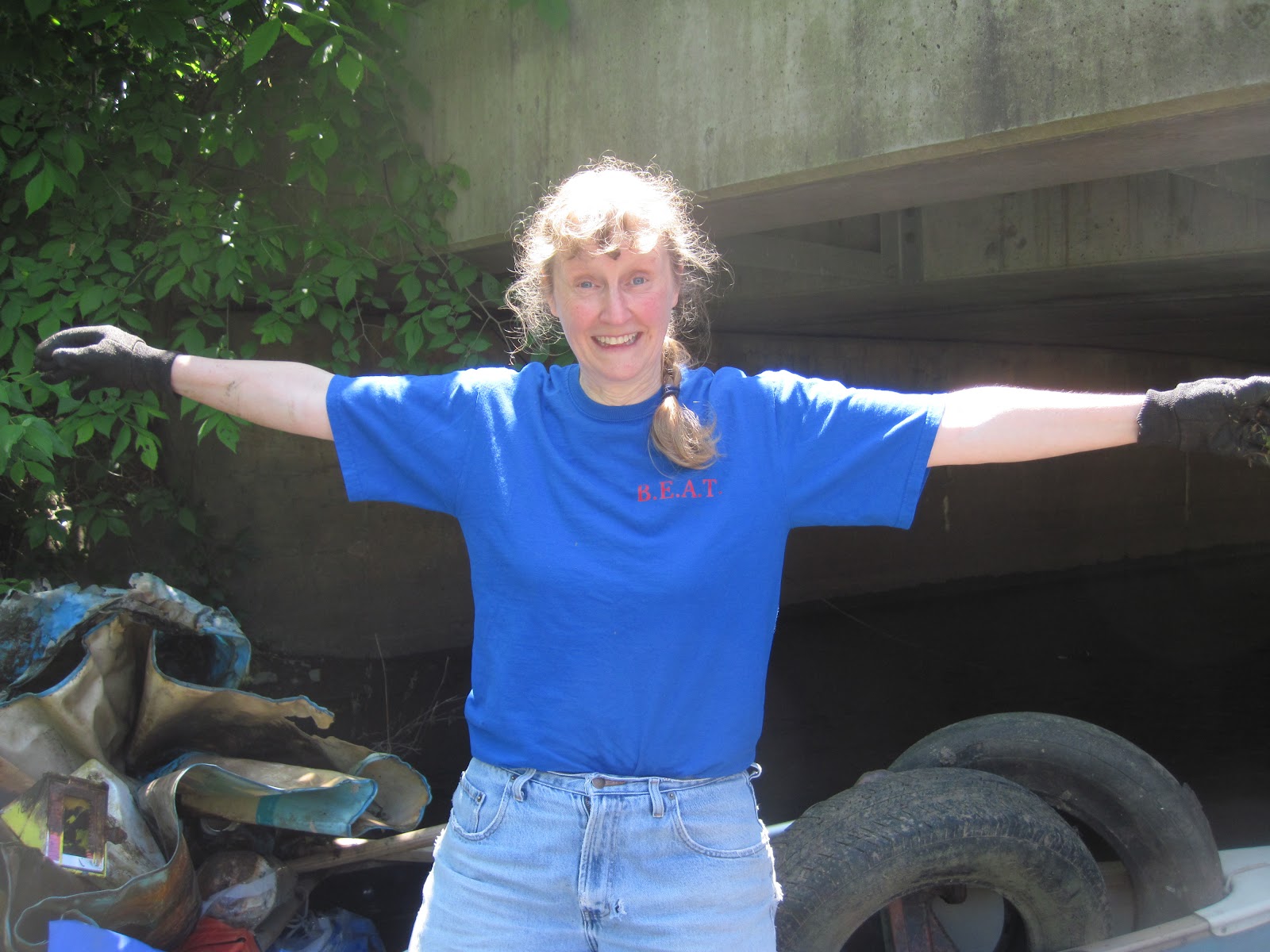
BEAT has organized forums and workshops on certifying vernal pools, has trained more than 350 volunteers in various projects from wildlife habitat assessment to river clean ups to road/stream wildlife crossings, and serves on the organizing committee for the Northeast Wildlife Trackers Conference – as well as organizing many other smaller walks, talks, and information sessions.

Opening Doors

BEAT began videotaping the Pittsfield Conservation Commission hearings which are now broadcast by Pittsfield Community Television. BEAT also videotapes for broadcast the Berkshire Metropolitan Planning Organization meetings, and many other meetings about environmental activities. These meetings are broadcast on local community access television.

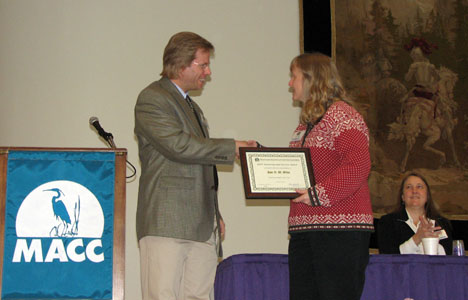
Environmentalist of the Year Jane Winn


In 2007, Jane received awards from the Massachusetts Association of Conservation Commissions, Pittsfield Community Television, and the Housatonic Valley Association for her tireless efforts to protect the environment.

“Long an environmental advocate and mobilizer of community interest and involvement in wetlands permitting deliberations and open space preservation in the Berkshires, Jane Winn is fierce in her determination and seldom willing to take “no” for a final answer. She has demonstrated many times over that perseverance is a powerful advocacy skill. With the creation, fundraising, nurturing and day-to-day management of the Berkshire Environmental Action Team (BEAT) and the weekly e-publication of The BEAT News, Jane has become a leading spokesperson on environmental issues. Her courage, dedication, and boundless energy have already produced stunning successes – and are creating a broad constituency of knowledgeable, caring activists and stewards to carry the work forward.”