Showing posts with label schools. Show all posts

February 21, 2018

HEALTHY KIDS HEROES 2018

Healthy Kids Heroes 2018: Speaking Up for Safety

Every year, to mark the anniversary of the 1937 Texas School Explosion, I salute inspirational leaders who demonstrate an extraordinary sense of responsibility and commitment to the safety of children and their communities. 

The Healthy Kids Hero Award was created as an annual opportunity to remember the 1937 tragedy — a gas explosion that killed more than 300 people, mostly students, in their new state-of-the-art public school
where no expense had been spared except when it came to safety.

One lesson of the 1937 tragedy is that a safe quality environment depends on champions dedicated to making safety and health a priority.

For 2018, there are three heroes. Each is known for effective advocacy and professionalism, the ability to inspire others, and especially for being compassionate, genuine and kind.

Their work illustrates the power of allies who share a sense of personal responsibility and purpose. They each contribute countless hours of professional and personal time as resources and mentors to their communities and colleagues.
  • IPM is a Team Effort  Kathy Murray is Integrated Pest Management (IPM) Specialist at the Maine Department of Agriculture, Conservation and Forestry. 

"...TO MAKE EVERY CHILD FEEL SAFE EVERY DAY."

Born and raised in Everett. Mr. John Obremski has worked in the Everett school district for 25 years, the last two years as Principal at Lafayette Elementary, a K-8 school with 950 students. He brought his previous school up from Level 3 (probationary status) to Level 1 (excellent). With his wife Jennifer, who is a grade one teacher, John has dedicated his life to supporting and advocating for children in public schools. He also serves on the school committee in Melrose Massachusetts.

A Culture of Compassion

Everett Superintendent Fred Foresteire writes,
“John has spent over 20 years in education as a teacher, guidance counselor, assistant principal and 11 years as a principal. Early in his career as an administrator he learned one of his students had a food allergy. Mr Obremski made it part of his mission to make certain that the student did not feel out of place at school.”
“He believes in teaching the Whole Child. His building has a thriving art and music program. His expertise in budget building and grant writing has brought millions of dollars to the district to support afterschool programs and healthy activities for students and professional development for staff. 
He wrote a children’s book, The Walking School Bus” to inspire children to walk to school in groups as part of his healthy living approach to education. 
If you ever want to find Mr Obremski, just look for children because that’s where this champion will be. “
Students meet at different locations and walk to school together. They play music outside and give out book marks and bracelets when they get there." --Eleanor Gayhart 

Health and Wellness = A Safe School Culture

Linda Sala has been active in the Lafayette Parent Teacher Organization since 2005 and is now PTO President. She says,
“Mr. Obremski gives his all for the kids, 110%. It is only his second year at the school and he knows all the kids. He is adamant about not taking any chances with kids’ safety. He has amazing relationships with the kids, parents and staff. His door is always open to every parent. His priorities are the kids’ health and wellness and their social emotional development.”
“Mr Obremski is very sincere, compassionate, and understanding. He can relate to everyone. He believes school needs to fun. He gets involved in every event. The school is very clean, well kept. The kitchen is spotless. Bathrooms are clean. Every other summer they repaint. They do a very good job on air quality.”
“He started a monthly program, Caught in the Act, that recognizes three students who show acts of kindness. In a short period of time, he has improved programs for the whole school. He has brought in sports, yoga and exercise as part of the Health and Wellness program. He has also provided up to date technology. Kids in grades 3, 4, and 5 got iPads. And he is very concerned about kids with allergies.”
As part of the school’s Health and Wellness Committee Obremski has emphasized healthy snacks. No outside food. No cupcakes or candy. He creates alternatives that the kids enjoy such as field days and in-school field trips. Students are rewarded for their achievements with stickers and privileges instead of candy.
​​At the Homecoming Parade 2017 
Assistant Principal William Donohue, 
Evelyn Gayhart, Principal Obremski
The school provides all students with a free breakfast and lunch. Obremski recognized that the large cafeteria could be intimidating to some younger students so he decided to serve breakfast in the classroom. He increased the number of students eating breakfast from 300 to 800.

In response to seeing a remarkable increase in the number of students with allergies, Obremski made new rules starting on his first day at Lafayette. Parents no longer send in outside food for class parties. Now children enjoy doing crafts, dancing, listening to a parent read a book, in-school field trips or outside games. For teachers, it reduces the stress of constant vigilance by limiting food in the classroom.

Inclusion Based on the Friendship Model  

Like Principal Obremski, many of the teachers grew up in the community. He says there is a deep feeling of home, of collaboration, of purpose, of paying it forward. The school serves over 200 students with Individual Education Plans. It is a multicultural community. Many students are learning English as a second language. The teachers pride themselves in relationship building with students and parents. They use a “friendship model” to include all students.

Obremski says his mission is to make every child feel safe everyday. ”I believe that schools should be one of the safest places on earth.” 

January 31, 2016

2016 Healthy Kids Heroeswww.healthy-kids.info logo.jpg

Every year, to mark the anniversary of the March 18, 1937 Texas School Explosion, I salute inspiring individuals who show extraordinary responsibility and inspirational leadership for school and community safety. They live and work by a standard of excellence and integrity — often in the face of denial, willful blindness, and indifference about hazards and unsafe conditions.


One lesson of the 1937 tragedy is that a safe quality environment depends on champions with an exceptional sense of responsibility. Another lesson is that we can’t take it for granted that local officials or elected representatives make community safety or health a priority. 

These four Heroes are inspiring for a combination of personal qualities and qualifications beyond credentials. Each, in his or her own way, promotes the values that build and continuously strengthen a culture of responsibility for safety and continuous improvement.
Rick Reibstein.jpeg

Todd and Rick are heroes because both have dedicated their lives and long careers to helping people make good decisions to prevent pollution and reduce environmental hazards in schools, workplaces and communities. As public agency officials, educators, mentors, and consultants, they have been innovative problem solvers in a variety of business, private, government and academic settings. They are experts at building relationships and trust with clients and communities.  
 JanePaddlingTrash.jpg
Jane Winn is a grassroots leader gifted at building community power to oppose pollution and advance sustainability. 

FB_IMG_1450830313189.jpg
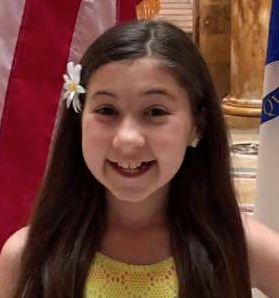
Brooke Leifer is an inspiring young woman dedicated to using music to inspire people “to make the world a better place, a special place, a healthy place, to stop pollution."
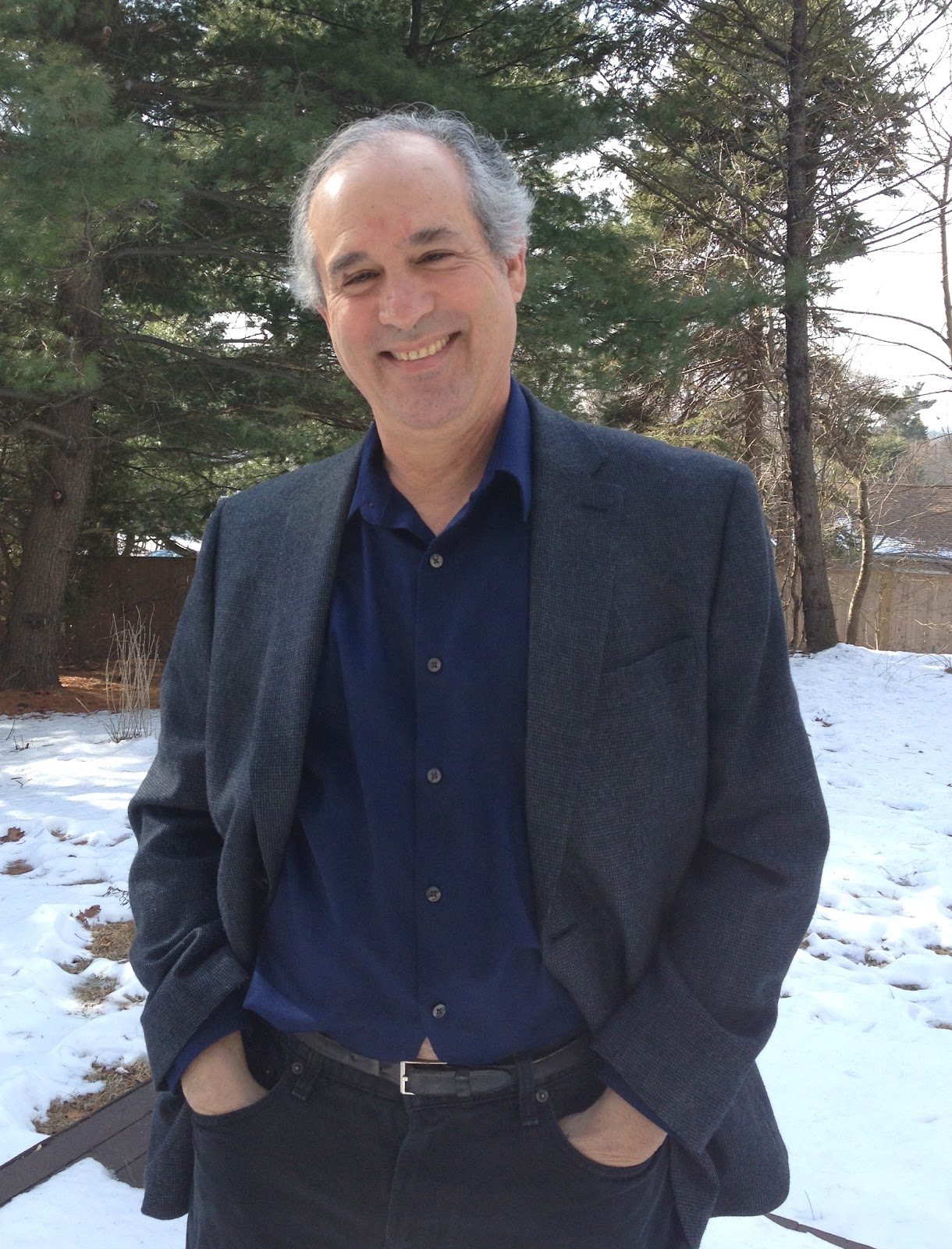
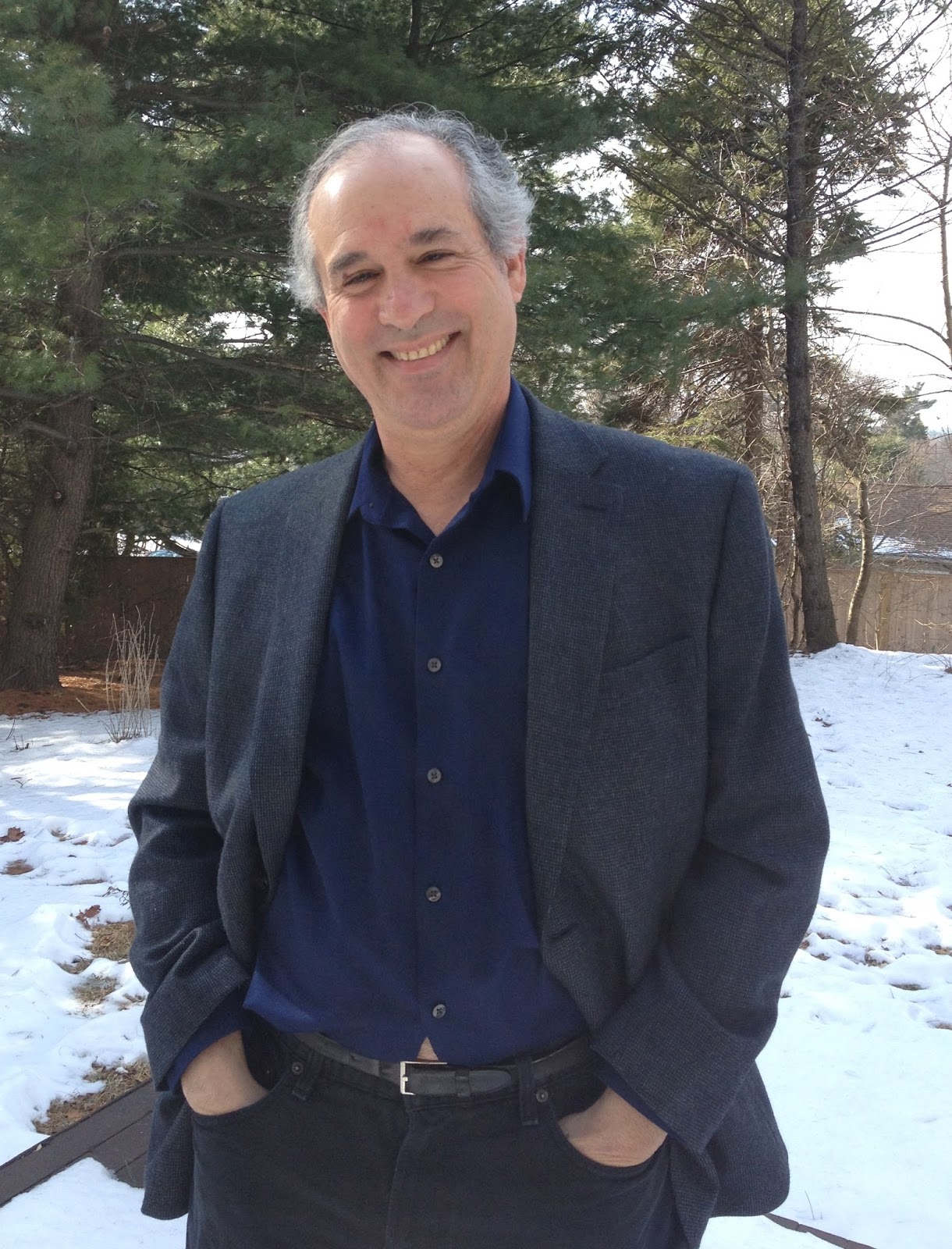
Rick Reibstein, Prevention First

Rick Reibstein is a life-long pollution prevention champion promoting innovation and transformation.

Rick is on the Faculty of Harvard Extension School and a Lecturer in Environmental Law at Boston University where he is the co-creator of the Regulated Community Compliance Project (RCCP). RCCP focuses on the relationship between government and the regulated community. It has provided training for over 3,000 real estate professionals on the lead disclosure rule and related regulations.
 
Protection Starts with Prevention

From 1989 to June 2015, Rick was a Senior Environmental Analyst at the Office of Technical Assistance (OTA) in the Massachusetts Executive Office of Environmental Affairs. OTA provides free confidential on-site technical assistance to manufacturers, businesses and institutions to reduce the use of toxic chemicals, energy and water.


OTA was created by the 1989 Toxics Use Reduction Act.  “In my opinion the Massachusetts Toxics Use Reduction Act is the best environmental law ever passed,” says Rick. “It created the Toxics Use Reduction Institute at UMass/Lowell and its sister, the Office of Technical Assistance (OTA).

Persistent Assistance and Willing Compliance

Rick believes that typical agency enforcement, while necessary, creates an adversarial relationship. At OTA, Rick practiced persistent assistance, a strategic approach to helping businesses and communities learn about the laws and reduce hazards by identifying opportunities to adopt safer materials and processes that cost less to use and manage.

The Source Reduction Model of Inquiry

Rick was among the first in the country to do on-site visits for pollution prevention, emphasizing  the importance of helping companies find the best, most efficient environmental options without telling them what to do.  “As I worked with companies, I learned I just needed to ask questions, not prescribe solutions.“

He focused on educating, training and demonstrating alternative technologies. He promoted the benefits of the “practice of compliance” with regulations and meeting standards set by such laws as the Clean Water Act, The Clean Air Act, and rules for hazardous waste management.  He taught that source reduction and other pollution prevention strategies avoided costs, reduced liability, avoided fees and penalties.

High Rates of Willing Compliance

By helping companies and communities to feel safe about reaching out and helping them meet regulations and standards Rick and his co-workers achieved high rates of willing compliance. Compliance rates increased more than 50%. “It was proof that a government program can have great results.”

OTA has worked quietly with about 2000 companies who voluntarily sought OTA assistance and site visits. In contrast with enforcement which often achieves minimum change, Rick calls OTA’s approach “relational environmental governance,” building relationships and trust. A former Secretary of Environmental Affairs called OTA the “state’s best kept secret, the crown jewel of government."

In Good Company

Rick is grateful to OTA’s first director, Barbara Kelley, for her vision of working collaboratively with the regulated community. Others, such as former Commissioner of the Department of Environmental Management Jim Gutensohn and division director Michael Brown, deserve recognition for prompting the new approach. There was also Ken Geiser, creator of the Toxics Use Reduction Act, Lee Dane, who oversaw the first assistance pilot program, and consultant Robert Pojasek, a pioneer in pollution prevention, who helped Rick understand how to do the work.

Childhood Values

“Being taken on hikes in the Catskills and New Hampshire as a child made me want to be in nature. I came back to school drawing pictures of mountains and trees.  My friends drew pictures of warplanes, ships and battles."

“My mother was an inspiration to me. She worked for the city of New York and did policy research and economic analysis. She predicted that the policy of deinstitutionalizing mental patients would lead to many homeless in the streets. She was right. She worked for years to get the city to recognize that it was not getting its full medicaid reimbursement. When the story finally broke, it was front page news. She didn’t get public recognition but she made such a big difference.”

His mother’s career gave Rick an appreciation and tolerance for the challenges of public service.  “I cared that she won the respect of all her co-workers and did work of excellence and impact.”

He saw that doing the kind of work that helps people and communities is tremendously satisfying and that leading an ethical life is a source of “happiness. The other motivating force was my mother getting cancer, her sisters dying of cancer, and others around me having cancer.”  

Education for Innovation and Transformation

Rick attended Hampshire College with an interest in science and art. He made sculpture out of waste metal. He changed to a focus on the environment, energy and transportations systems. He researched alternatives to nuclear power and fossil fuels, and how to influence attitudes to prompt change. He graduated with a degree in “Creative Writing in the Public Policy of Science.”

Rick got his JD at Brooklyn Law School. In 1979 he was inspired by hearing a young Amory Lovins, cofounder of the Rocky Mountain Institute (www.rmi.org), whose talk on the “Soft Path” went up against a group of highly respected authorities and was entirely convincing.

Breaking the Silence

Rick’s first  job in government was in the state budget office reviewing environmental programs. Next he investigated PCBs in public buildings such as prisons and community colleges. He found serious problems and wrote a report directing attention to violations of environmental rules in state facilities.

He pointed out that the federal Toxic Substances Control Act required immediate public notification and containment. It shook people up. Taking responsibility for the condition of state buildings was an uncomfortable new idea to engineers and agency administrators. When Michael Dukakis was Governor, there was a heightened awareness of the Commonwealth’s accountability.  

Rick brought the concept of legal compliance to the table.

Rick’s formation of an interagency committee was supported by his supervisor. Members of the Departments of Health, Environmental Protection and Transportation enthusiastically participated. They supported Rick’s report on the need to better manage hazards in state facilities. The Executive Office of Administration and Finance asked how much it would cost to address the environmental impacts of state agencies.

Attorney General Harshbarger forced cleanups under the federal Resource Conservation and Recovery Act (RCRA), the public law for the proper management of hazardous and non-hazardous solid waste. (However, eventually new leadership came in and disbanded the committee.) However, Rick was later able to reestablish a team that provided assistance to state agencies in improving their environmental performance. This has evolved into the Lead by Example Program to address greenhouse gas emission reductions, energy conservation and efficiency, renewable energy, green buildings, and water conservation.


Promoting School Chemical Clean Outs

In 1993, OTA staff and community health agents such as Marina Brock, Barnstable County Environmental Health Specialist, did a series of school visits and discovered a high quantity of hazardous chemicals and unsafe chemical storage in schools.   

They found that school officials were often reluctant to acknowledge the hazards. Rick got a grant from the US EPA to fund an OTA initiated project, Chemical Use Reduction for Indoor Air Schools (CURIAS) (infohouse.p2ric.org/ref/16/15185.pdf). The program linked chemical use to poor indoor air quality and promoted chemical clean outs.  (See “Impediments to Implementing P2 in the Public Schools, Marina Brock, 1994.) 

With the help of Susan Lanza, Rick helped create a unique Mentor Program to match chemistry professionals with schools to clean out chemical stockpiles and set up chemical hygiene programs. Rick also helped form a multi-agency task force on schools create compliance guidelines for a big matrix of indoor air quality and chemical issues.

As an example of what schools can do to improve safety, Rick will never forget what he learned from Monona Rossol,  industrial hygienist and President of Arts, Crafts & Theater Safety, Inc.,. “Don’t just look at general ventilation rates. Ask if the airflow is bringing chemicals into the breathing zone.”

Later, Rick launched programs for environmentally preferable purchasing and trainings for schools, hospitals, and business networks. He received a US EPA grant for OTA to work with regional planning agencies and fire departments on preventive hazards management.
In 2010, RICK created the Massachusetts School Sustainability Coordinators Roundtable  to honor and encourage student volunteers whom he had worked with on greenhouse gas calculations and other campus projects.  He organized the Spring Convocation of Students Working with Sustainability Coordinators.

He also was a founder of the Business Environmental Networks and the National Electronic Products Recovery and Recycling Roundtable that prompted a national effort to address electronic waste. He is a former editor of Hazardous Materials Intelligence Report and the creator and editor of Radiation Events Monitor.
Rick Reibstein.jpeg

Rick was declared a “P2 Champion” of 2015 by the National Pollution Prevention Roundtable (NPPR), the premiere group for pollution prevention (P2) professionals. Rick is on the board of the National Pollution Prevention Roundtable where he has advocated for addressing Toxics in Schools. Photo by Department of Earth & Environment.

January 29, 2016

For Today's Responders, 1937 Texas Tragedy Still Carries Lessons for Avoiding Disaster 


NOAA Office of Response and Restoration
FEBRUARY 17, 2015 -- On March 18, 1937, a gas explosion occurred in a school in New London, Texas, killing almost 300 of the 500 students and 40 teachers in the building. 

The brand new, steel-and-concrete school, located in the East Texas Oilfield, was one of the wealthiest in the country. Yet it was reduced to rubble in part because no one could smell the danger building in the basement.

While the building originally had been designed for a different heat distribution system, school officials had recently approved tapping into a residue gas line of the local Parade Gasoline Company, a common money-saving practice in the oilfield at the time. 

Unfortunately, on that March afternoon, a faulty pipe connection caused the gas (methane mixed with some liquid hydrocarbons) to leak into a closed space beneath the building. Just before class dismissal, when a maintenance employee turned on an electric sander, the odorless gas ignited. The resulting explosion caused the building to collapse, burying victims. (Watch a video of a news reel covering the event from March 1937.)

By standards employed today, a gas leak could be detected in advance by its odor. The odorless gas in the New London disaster was able to accumulate in the space before anyone was aware of it. 

As a direct result of this incident, a Texas law mandated that malodorants be added to all natural gas for commercial and industrial use, a practice that is now an industry standard. Mercaptan, a harmless chemical, gives gas its distinctive rotten egg odor. It is added to natural gas to make it quickly recognizable and to prevent accidents like this from happening.

Read full article: http://response.restoration.noaa.gov/about/media/todays-responders-1937-texas-tragedy-still-carries-lessons-avoiding-disaster.html

October 23, 2015

UNSAFE SCIENCE

Across the country, students in school science classrooms and other laboratory settings are being burned and injured when accidents occur during science demonstrations. (UNSAFE SCIENCE by Andrew Minister, NFPA Journal, September-October 2015.) NFPA Journal is the official magazine of the National Fire Protection Association NFPA.org 

Andrew Minister is chief fire protection engineer at Pacific Northwest National Laboratory in Richland, Washington, and chair of NFPA's committee on Laboratories Using Chemicals.
A few of the resources in UNSAFE SCIENCE
CSB safety bulletin, “Key Lessons for Preventing Incidents from Flammable Chemicals in Educational Demonstrations.” By following the requirements of NFPA 45 and the lessons provided by the CSB, and by exercising caution and common sense in laboratory settings, schools and teachers can prevent these incidents that have resulted in injury and trauma to hundreds of students.

NFPA Lab Safety Tip sheet for Teachers and Students Download NFPA's Lab safety tip sheet. (PDF, 1.72 MB)

Laboratory Safety Institute (LSI), an international nonprofit education organization for laboratory safety that provides low-cost laboratory safety training and reference materials for schools.  
More at UNSAFE SCIENCE


March 16, 2015

Healthy Kids Hero 2015 - A WOW Experience
For Release March 18, 2015  
Contact: Ellie Goldberg, ellie.goldberg@healthy-kids.info

Healthy Kids Hero 2015
Gregg Smith, Director of Facility Services
and his Salt Lake City Schools Facility Team 
for their Facility Services Newsletter,  

March 18, 2015 is the 78th anniversary of the 1937 TX School Explosion that killed more than 300 people, mostly students.  Every year, in remembering the tragedy, I salute a Hero whose extraordinary sense of responsibility inspires excellence in school safety.  

Honoring an inspiring leader is part of a campaign to make March 18 a special day to bring "safety" from the margins to the core of school and community culture. (Lessons of the 1937 Texas School Explosion.)

The 2015 Hero is Gregg Smith, Director of Facility Services, and his Salt Lake City Schools Facility Team. 

Gregg and his staff have been widely recognized and congratulated for many successful exemplary programs and best practices in indoor air quality, integrated pest management, energy efficiency and recycling.   

However, this recognition applauds the Facility Services newsletter, Fresh Paint, for best practice in communication that builds and continuously strengthens a culture of responsibility and continuous improvement. Fresh Paint is an extension of Gregg Smith’s management philosophy “Communicate, Coordinate, Follow Through” and it is printed on every staff meeting agenda.


Read full story: Announcing Healthy Kids Hero 2015 

January 25, 2015

Set aside a special day  
...let us suggest the legislature of Texas set aside a special day each year to be observed as a memorial day on which tribute will be paid to the children and teachers who died in this catastrophe...and to make laws of safety... Our daddies and mothers, as well as the teachers, want to know that when we leave our homes in the morning to go to school, that we will come out safe when our lessons are over.“ Read the complete speech by Carolyn Jones Frei, March 25, 1937 to the Texas Legislature after the 1937 March 18 Texas School Explosion.

Let’s make March 18 an annual day to Bring the Lessons of 1937 to Your School.  Tell the story of the 1937 TX School Explosion, study its lessons, and celebrate the leadership and partnerships that can save lives. Update your school's values and technical skills to live safely with 21st century chemicals and technology. Read about inspiring heroes at http://tinyurl.com/HealthyKidsHeroes2015.  

As a result of the New London tragedy, the 45th TX Legislature enacted House Bill 1017 which amended Article 6053, Texas Revised Civil Statutes, 1925, giving the Railroad Commission the authority to adopt rules and regulations pertaining to the odorization of natural gas or liquefied petroleum gases. On July 27, 1937, Gas Utilities Docket 122 was adopted and the Commission began enforcement of odorization requirements for natural gas.
"My sister Helen Jones, an honor student and member of the high school champion debate team, was not so fortunate. She and my uncle, Paul Grier, a senior who planned to study medicine, were both taken from us in this awful explosion that killed so many of the future generation of East Texas."-- Carolyn Jones Frei, 1937 

January 09, 2015

Safety in the Science Classroom

#6 Question of the Month 
Q: I'm looking through the NGSS and I don't see any standards about lab safety or health education. Am I missing something? 

A: The NGSS are science content standards based on the National Research Council's Framework for K-12 Science Education, and as such, contain neither health education standards nor lab safety standards. This is not an indication that these topics are unimportant, but rather that they go beyond the content contained in the Framework.  Each state typically has both health education standards and lab safety standards or manuals that are used in addition to their science content standards. 

To find additional resources about lab safety, you can visit this page for books and resources: Safety in the Science Classroom.