Showing posts with label children. Show all posts

November 16, 2018

Visualizing the Danger


As I watch the Usw Gasworkers videos of replacement workers’ hazardous errors and read the reports of the utility companies’ flawed operations and the failures of state and federal oversight, I am reminded of the 1937 Texas School Gas Explosion that killed more than 300 students, teachers and visitors.
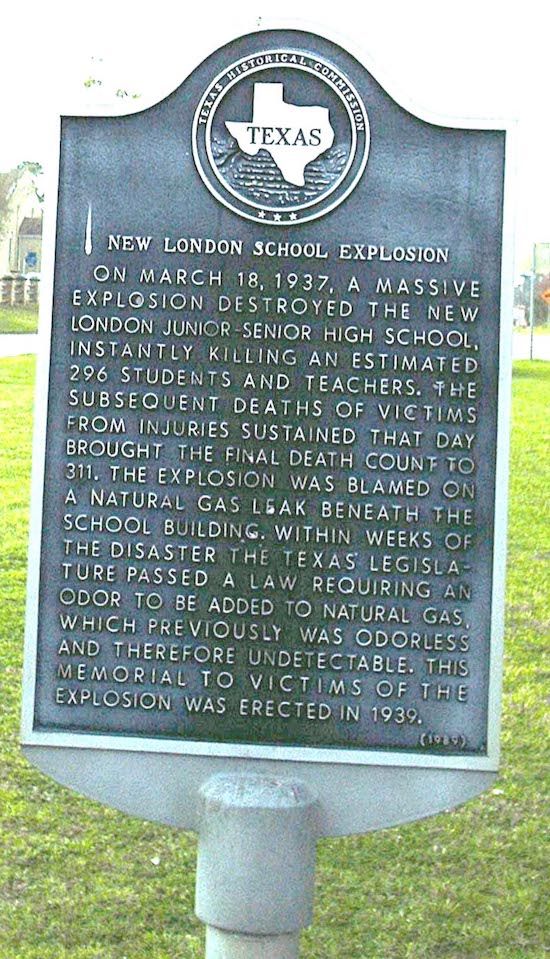

In 1937, school, town and oil company officials ignored warnings and agreed to look the other way as their unnecessary shortcuts and reckless indifference endangered a whole generation in a small East Texas town. Yet while the Court of Inquiry identified a series of design, building and operations problems and unheeded warnings, they named no one responsible. They concluded that school officials were just "average individuals, ignorant or indifferent to the need for precautionary measures, where they cannot, in their lack of knowledge, visualize a danger or a hazard." (Court of Inquiry, 1937.)


Today no one can claim that we cannot visualize the danger of our leaky gas infrastructure. Only those willfully blind are indifferent to the photos of explosions and fires in Merrimack Valley, the stories of death, injuries, devastation and trauma, and the system wide long-standing deficiencies such as those detailed in the November 1 USA Today article.


The danger grows by the day.  None of us can ignore the fact that thousands of leaks in Massachusetts communities have gone unrepaired for years while the utility companies charge customers millions of dollars for the lost gas.  


We have learned that old records and maps of the pipes and turn-off valves, if they exist, can be dangerously misleading and inaccurate. And many repairs do not stop the leaks. Even after ruptures and explosions are repaired, as in Prince George BC and in Merrimack Valley, the supply can be unreliable for a long time.


The truth is that, even if the utility companies had enough money to replace all the pipes, which they don’t, there are not enough field inspectors to oversee the quality of pipeline work. They do not have enough qualified personnel to do the work yet they continue to lock out experienced union gas workers. Nor are Governor Baker’s appointments to the Department of Public Utilities diligent in their oversight of the utility companies. The danger is heightened by state and federal safety regulations and standards that vary widely and often are not enforced.


No More Willful Blindness. The 1937 disaster resulted in a law requiring adding mercaptan as a warning odor to natural gas. As a result, in our own neighborhoods, we can smell the sulphurous “rotten eggs” when we walk our children to school or take our dogs around the block or go out to pick up the newspaper. Sometimes the odor is so strong we can smell the gas as we drive by, especially where holes have been drilled in the street pavement to vent the fumes instead of fixing a leak.


Inspirational Leadership. The growing grassroots organization Mothers Out Front has become a bold public advocate for policies and standards that respond to the threats of climate change and for accountability from government and corporate officials.


Breaking the silence. Rooted in a shared sense of unquenchable responsibility, Mothers Out Front state and community teams have built partnerships to fight for improved maintenance of the aging gas distribution system and to expose the health impacts of fracked gas all along the supply chain. Their ultimate goal is a swift complete and just transition away from fossil fuels and toward a future based on clean and renewable energy.


Mothers Out Front Newton applauds Newton Mayor Ruthanne Fuller and City Councilors who have taken an honest clear eyed look at the dangerous condition of our aging gas pipelines and the inadequacy of the gas companies’ operations. Their October 30 letter calls on Governor Baker and the MA Department of Public Utilities to live up to their statutory responsibility and act immediately to safeguard our community.


Use Less, Green the Rest. Mothers Out Front Newton is grateful to our City officials for speaking up for the safety and sustainability of our community and taking meaningful steps to promote clean renewable energy and energy efficiency in City programs and policies.

Lessons Learned. Indeed, we can all visualize a livable future and must take responsibility for achieving it.
~~~~~


Newton Pushes Governor On Gas Regulation After Merrimack Valley, 'We count on you to protect us from the risks associated with the use of natural gas,' say the Newton Mayor and City Councilors in a letter. Nov 1, 2018.

February 21, 2018

IPM IS A TEAM EFFORT

Kathy Murray has a national reputation for dedication, expertise, and leadership. Murray is co-coordinator of the Northeastern School Integrated Pest Management (IPM) Working Group and a member of the National IPM School Steering Committee. The Northeastern Group is a regional group with representatives from land-grant IPM programs, government, private industry, and nonprofits from eleven northeastern states.

The School IPM Working Group encourage partnerships with diverse stakeholders such as landscape, turf, schools, homes, structures, gardens, urban forests, and public health. Murray also leads the Maine School IPM Program that provides training and guidance to all public and private schools in the state.

Kathy Murray’s presentation, “The Maine School IPM Coordinators Role," is one of the many resources she has created to help school staff meet IPM Coordinator certification standards and to implement best practices for reducing risks of pests and pesticides and improving indoor air quality.

The theme of her program is that IPM is a team effort. It reduces health risks and energy costs, saves time, protects property and the environment and solves pest problems sensibly, permanently, affordably.


A Legacy of Leadership

“Kathy is a preeminent person in New England and beyond,” says her IPM Working Group Co-coordinator, Lynn Braband, Senior Extension Associate for the NY State IPM Program of Cornell U.
"She has been a key member and leader of the School IPM Workgroup for its whole existence. She is the main school IPM outreach person for the state of Maine and her talents are used nationally. She is sought after as a collaborator. She recently received a grant to expand programs and resources for school nurses and was a collaborator on a grant to study over-seeding as a management tool on school athletic fields.”

School Nurses on the Front Lines of Public Health

Photo Credit 
Maine Forest Service
Murray’s work with school nurses is described in a recent article in EntomologyToday, The Role of School Nurses in Integrated Pest Management for Public Health.

In addition to surveys that identify gaps and needs of school staff, Murray says she learns valuable insights from visiting schools and from conversations with school staff. For example, when a school nurse called her agency for information about an infestation of browntail moth caterpillars causing severe rashes among students, Murray organized a state-wide webinar to provide timely recommendations for nurses and facility directors.

Other high interest topics for schools are ticks and mosquitoes. There are new tick tools for school nurses to promote awareness of IPM.

Murray is impressed by the level of school nurses’ activism and pride, saying “They know how to get things done.” Murray encourages school nurses and facility managers to work together to advocate for IPM resources.

A Champion for Children

Veronika Carella, a Children's Environmental Health Advocate and Legislative Director of the Maryland Children's Environmental Health Coalition is another long serving leader in the IPM School Working Group.
“As an advocate for children, I am thankful for people like Dr. Kathy Murray. Dr. Murray has worked diligently for many years to guide, educate and inspire others on how to control pests without causing harm to children and their environment. Recognizing the impact that chemical means of pest control can have on a child’s school and community, Dr. Murray has championed and promoted safer alternatives. I have seen firsthand how her efforts have improved the lives of many children."
Robert Koethe, Ph.D., Region 1 Pesticide Expert, U.S. EPA-New England, Region 1, writes,
“...While Kathy Murray’s responsibilities include working in many agricultural and non-agricultural systems she is most passionate about protecting children from risks posed by pests and pesticides. Kathy is a leader in educating parents, teachers and other school staff on pesticide use and IPM methods. She has developed innovative programs to teach school facility managers, nurses and teachers on IPM methods and complying with Maine’s school IPM program. She can always be counted on to go the extra step to help people in need of good information on protecting themselves and their children from pests and misuse of pesticides in the school environment.”
Stop School Pests: IPM for Everyone 

Murray has contributed to the development of school IPM resources such as the IPM Working Group’s “Best Management Practices for School IPM and the School IPM Cost Calculator (IPMCalculator.com) developed by Texas A&M Agrilife Extension Service.

Another recent project she was involved with is the StopSchoolPests program spearheaded by the University of Arizona and the IPM Institute, the first-ever standardized, national, peer-reviewed, pilot-tested training that has undergone many rounds of feedback from participants working in schools to make sure it meets their needs. There are free online training modules for Facility Managers, Maintenance Staff, Administrative Staff, Teachers, Food Service Staff, Custodial Staff, Landscape and Grounds Staff, School Nurses and IPM Basics – Introductory training.


Murray also partners with the Maine Chapter of the Education Plant Maintenance Association that provides leadership for vendors, custodians, facility directors, safety and health professionals. Murray often provides IPM training for new and veteran IPM School Coordinators as well as custodians and maintenance staff at their annual conference.

The Compassion of a Social Worker

“I love Kathy Murray as a person and professional” writes Janet A. Hurley, MPA, Extension Program Specialist III, School IPM, Texas A&M AgriLife Extension Service (Hero 2013).
“Kathy is one of those rare individuals who works for a state agency, but has the compassion to do her job like a social worker. She gives of herself and her time to not just work with schools, but producers, pest control professionals, nurses, and others. Her role with Maine Department of Agriculture, Conservation and Forestry could just be an educator or regulator, but she truly cares of what the people of Maine need."
When I first met her I remember her work with School IPM, but she was also working with vegetable growers. She would go from a school district in the morning to a farm in the afternoon and happy all along the way. Kathy has taught me a lot over the years how to be a good leader. Working with her on the National School IPM Work Group, plus other work groups for the International IPM Symposium and eXtension Urban IPM Community of Practice I know I can count on her to get a task done.”
"...TO MAKE EVERY CHILD FEEL SAFE EVERY DAY."

Born and raised in Everett. Mr. John Obremski has worked in the Everett school district for 25 years, the last two years as Principal at Lafayette Elementary, a K-8 school with 950 students. He brought his previous school up from Level 3 (probationary status) to Level 1 (excellent). With his wife Jennifer, who is a grade one teacher, John has dedicated his life to supporting and advocating for children in public schools. He also serves on the school committee in Melrose Massachusetts.

A Culture of Compassion

Everett Superintendent Fred Foresteire writes,
“John has spent over 20 years in education as a teacher, guidance counselor, assistant principal and 11 years as a principal. Early in his career as an administrator he learned one of his students had a food allergy. Mr Obremski made it part of his mission to make certain that the student did not feel out of place at school.”
“He believes in teaching the Whole Child. His building has a thriving art and music program. His expertise in budget building and grant writing has brought millions of dollars to the district to support afterschool programs and healthy activities for students and professional development for staff. 
He wrote a children’s book, The Walking School Bus” to inspire children to walk to school in groups as part of his healthy living approach to education. 
If you ever want to find Mr Obremski, just look for children because that’s where this champion will be. “
Students meet at different locations and walk to school together. They play music outside and give out book marks and bracelets when they get there." --Eleanor Gayhart 

Health and Wellness = A Safe School Culture

Linda Sala has been active in the Lafayette Parent Teacher Organization since 2005 and is now PTO President. She says,
“Mr. Obremski gives his all for the kids, 110%. It is only his second year at the school and he knows all the kids. He is adamant about not taking any chances with kids’ safety. He has amazing relationships with the kids, parents and staff. His door is always open to every parent. His priorities are the kids’ health and wellness and their social emotional development.”
“Mr Obremski is very sincere, compassionate, and understanding. He can relate to everyone. He believes school needs to fun. He gets involved in every event. The school is very clean, well kept. The kitchen is spotless. Bathrooms are clean. Every other summer they repaint. They do a very good job on air quality.”
“He started a monthly program, Caught in the Act, that recognizes three students who show acts of kindness. In a short period of time, he has improved programs for the whole school. He has brought in sports, yoga and exercise as part of the Health and Wellness program. He has also provided up to date technology. Kids in grades 3, 4, and 5 got iPads. And he is very concerned about kids with allergies.”
As part of the school’s Health and Wellness Committee Obremski has emphasized healthy snacks. No outside food. No cupcakes or candy. He creates alternatives that the kids enjoy such as field days and in-school field trips. Students are rewarded for their achievements with stickers and privileges instead of candy.
​​At the Homecoming Parade 2017 
Assistant Principal William Donohue, 
Evelyn Gayhart, Principal Obremski
The school provides all students with a free breakfast and lunch. Obremski recognized that the large cafeteria could be intimidating to some younger students so he decided to serve breakfast in the classroom. He increased the number of students eating breakfast from 300 to 800.

In response to seeing a remarkable increase in the number of students with allergies, Obremski made new rules starting on his first day at Lafayette. Parents no longer send in outside food for class parties. Now children enjoy doing crafts, dancing, listening to a parent read a book, in-school field trips or outside games. For teachers, it reduces the stress of constant vigilance by limiting food in the classroom.

Inclusion Based on the Friendship Model  

Like Principal Obremski, many of the teachers grew up in the community. He says there is a deep feeling of home, of collaboration, of purpose, of paying it forward. The school serves over 200 students with Individual Education Plans. It is a multicultural community. Many students are learning English as a second language. The teachers pride themselves in relationship building with students and parents. They use a “friendship model” to include all students.

Obremski says his mission is to make every child feel safe everyday. ”I believe that schools should be one of the safest places on earth.” 

January 10, 2016

Early Warnings, Late Lessons 

One lesson of the 1937 School Explosion story is that we can’t take it for granted that local officials and elected representatives make community safety or health a priority.

Lessons Lost, Cutting Costs. 
Flint, Michigan 2016

The poisoning of Flint’s water supply is another sad illustration of what happens when cutting costs comes before protecting the public. 


To save money, the Governor's appointed city manager switched the public water supply to the long-polluted Flint River rather than from Detroit’s system. But the river’s water was high in salt, which helped corrode Flint’s aging pipes, leaching high amounts of lead into the water supply. Months of a poisoned water supply has caused serious acute, ongoing and long term damage to the residents, especially brain damage to the lead poisoned children. 

To make matters worse, officials knew that the water was bad but there was denial and dismissal of residents concerns for over a year. More:  What Did the Governor Know About Flint's Water, and When Did He Know It? The Atlantic, January 9, 2016
  
Bad Decisions, Broken Promises: A Timeline of the Flint Water Crisis
ABC News, Timeline of the Water Crisis

Failures to follow law caused Flint water crisis

__________________________

Lessons Lost, Cutting Costs.  
New London TX 1937

March 18, 1937, a gas explosion killed more than 300 students, teachers and visitors while they were in the supposed safe haven of a new state-of-the-art public school. 

To save money the school board substituted a gas system for the steam system. They had ignored the architects' warnings that the building had not been designed to vent gas fumes. Then, the school board decided to hook-up to a free residue gas line while school and oil company officials agreed to look the other way.

An inquiry into the disaster reported other design, building and operations problems and unheeded warnings. Even though the gas had no odor, there were reports that students had headaches and burning eyes from gas fumes in their classrooms. One account describes students sitting in a classroom with jackets on and windows open to vent the fumes.

On March 18, thirteen minutes before school dismissal, a shop teacher flipped a switch to turn on a power sander and a spark set off a gas explosion.


Following the disaster, a law was passed required an odor in natural gas. Other recommended school safety measures have yet to be implemented in most communities.

Read more: The Unfinished Legacy: What was the 1937 Texas School Explosion?

January 17, 2014

Vinyl Plastic

Hazardous to Workers and Children

NYC CLC-NYCOSH - 2014 Safety & Health Series


Wednesday, January 29, 2014

10:00 a.m. – 1:00 p.m.

256 West 38th St., 12th flr, New York, NY


Event Registration


Learn about the hazards of vinyl in schools and other buildings and also about safer, cost-effective alternatives to it.


Polyvinyl chloride (PVC or vinyl) is a commonly used plastic that releases chemicals like phthalates and dioxins that are hazardous to workers, women of child-bearing age and children. Chemicals released in the production, use and disposal of vinyl are linked with asthma, cancer, learning and developmental disabilities, and other chronic and increasingly prevalent diseases. Find out how you can help promote healthier and greener buildings for workers, children and other building occupants. 

Sponsored by the New York City Central Labor Council (NYC CLC) and the New York Committee for Occupational Safety and Health (NYCOSH).


January 02, 2014

What is a Healthy Schools Hero?

HEROES understand that when it comes to making decisions that impact children, "no risk is acceptable if it is avoidable."  

HEROES are committed to building schools for occupancy by children recognizing that standards, building codes, and guidelines that are based on the average adult male or workplace regulations are not safe for children because children are not little adults.
 
HEROES serve as a resource and mentor to the school community, setting up in-house systems for community participation, health surveillance, and ongoing hazard identification and control.
 
HEROES support the rights of parents to be involved in the decisions that affect their children, acknowledging that without informed parents, there will never be enough experts or inspectors to ensure schools are the healthy places and safe havens they are supposed to be.

HEROES educate community members, preparing them to exercise their special rights as parents, employees, patients, students and citizens.  

HEROES advocate for precautionary standards and protective measures as active members of building committees, school health advisory councils, site-based management boards, and environmental quality teams that set child safety standards and guidelines for school design, renovation, operations and maintenance, pest-proofing, lab safety, and all activities in and around the school.
Yes, it is painful to threaten the illusion of safety in a school or community and to talk about death and loss. The New London School Explosion survivors did not talk about their painful experiences for more than forty years. Their stories clearly teach us that it is even more painful to live with a tragedy when opportunities to prevent loss were unseen or overlooked.


January 23, 2013

...children need, first and foremost, to be safe.


Writing about visiting his granddaughter on her first day of kindergarten, Dr. Charles Patterson reflects "on the trust placed in all of us as educators.
... Just as Lauren is precious to our family, millions of the world's children are precious to their families and friends. Those adults are depending on us, as educators, to treat their children with respect, care, and concern, just as we want other adults to show kindness to the children we love so deeply.  Educators should never lose this perspective… children and their well-being as the focus of all we do."   (“Message from the President” in Education Update, ASCD, 1995.)
In an interview Dr. Patterson said that he was well aware of the New London School Disaster. 
“It is the most terrible example of the price to be paid when adults forget that children need, first and foremost, to be safe.  Protecting them from hazards is a primary duty. It is an area that urgently needs an infusion of advocacy.”
-- Dr. Charles Patterson is a former school superintendent of Killeen Independent School District (Texas) and former president of the Association for Supervision and Curriculum Development (ASCD).

Originally posted March 4, 2012
  

January 18, 2013

October 16, 2012

NEW EPA HEALTHY SCHOOL GUIDELINES & WEBINARS

EPA is pleased to announce the release of Voluntary Guidelines for States: Development and Implementation of a School Environmental Health Program. The guidelines were mandated by the Energy Independence and Security Act of 2007 and were developed in consultation with other federal agencies, states, school officials, and non-profit organizations.

School environments play an important role in the health and academic success of children. Children spend 90% of their time indoors and much of that time is spent in school. Unhealthy school environments can affect children’s health, attendance, concentration, and performance, as well as lead to expensive, time-consuming cleanup and remediation activities.


These voluntary guidelines recommend six steps states can take to build or enhance a school environmental health program. The guidelines also include a model K-12 school environmental health program as a resource that states can customize and share with schools and school districts to help them establish, or enhance an existing, school environmental health program. The model program incorporates EPA’s unique school programs such as Tools for Schools, Healthy School Environments Assessment Tool (Healthy SEAT), ENERGY Star for K-12 Schools and others, to help schools and school districts begin or enhance a comprehensive school environmental health program.


To complement the guidelines release, OCHP will be hosting two webinars in October and November, respectively. 

 
(1) The first webinar, Why Environmental Health Matters in Schools, will be held on October 17th from 2:00-3:00pm EST. The webinar will feature Larry K. Lowry, PhD, Director of the Southwest Center for Pediatric Environmental Health (SWCPEH) and Director of Graduate Programs in Environmental Health at the University of Texas Health Science Center at Tyler, who will discuss the critical link between students and their environment and how it can affect their performance in school.
 
(2) The second webinar, Integrated School Health Tools for Districts, will be held on Wednesday November 7th from 2:00-3:00pm EST. This webinar will discuss how schools and school districts can create healthy environments for students by implementing a comprehensive, sustainable environmental health program. The webinar will feature highlights, tips, and strategies from established state programs. 
 
You can register for both webinars at: https://esbuildings.webex.com/mw0306ld/mywebex/default.do?siteurl=esbuildings
 
To learn more about the guidelines, please visit our website at www.epa.gov/schools.

June 30, 2012

(Beyond Pesticides, June 5, 2012) A new study finds that children exposed to high levels of naphthalene, a common air pollutant and the active ingredient in mothballs, are at increased risk for chromosomal aberrations (CA's) that have been associated with increased cancer risk in adults. These include chromosomal translocations, a potentially more harmful and long-lasting subtype of CAs, which are of special concern as they result in a portion of one chromosome being juxtaposed to a portion of another chromosome, potentially scrambling the genetic script.
 
Source: Columbia University Press Release  Children Exposed to Naphthalene—a Common Pollutant Best Known as the Key Ingredient in Mothballs—Show Signs of Chromosomal Damage
  

February 07, 2012


How Safe Is Your School?

Schools fill budget holes with fracking revenues http://www.stateline.org/live/details/story?contentId=597091


Public Schools vs. Shale Gas Pipelines  http://keeptapwatersafe.org/2012/01/31/public-schools-vs-shale-gas-pipelines/

Child Health Groups Call for Robust Assessment of Hydrofracking Health Impacts, www.healthyschools.org
Map of public school facilities in Marcellus Shale: P-12 public school facilities relying on private well water on the Marcellus Shale. This includes classroom buildings, administrative offices and bus garages.
The No Fracking Campaign http://chej.org/nofracking/
 ~ ~ ~ ~ ~ ~ ~ ~
(a) Safety: the condition of being protected against physical, social, spiritual, financial, political, emotional, occupational, psychological, educational consequences of failure, damage, error, accidents or harm.  (b) Safety can also be defined to be the control of recognized hazards to achieve an acceptable level of risk in the protection of people, possessions and environment. Quoted with permission.  --  Lynda K. Farrell, Executive Director, Pipeline Safety Coalition, www.pscoalition.org


October 02, 2011

October is Children's Health Month

Develop a "Safety Bill of Rights" for your school.  For example:
  • Parents, educators, and health professionals owe it to children to teach safety and teach safely.
  • Every child has a right to an environmentally safe and healthy home and school.
  • Schools should be role models for environmental safety and environmentally responsible behavior.
  • Everyone has a right to know about unsafe and unhealthy school conditions and to be involved in efforts to create and maintain safe conditions.

February 08, 2011

EPA Grant to protect children in homes, schools, child care

EPA's Office of Children's Health Protection is pleased to announce the release of a solicitation for grant proposals to address children's environmental health in underserved communities by building capacity for these communities to reduce environmental exposures in child-occupied settings, eg, homes, schools and child care centers.  Funds available for award are expected to total approximately $1.5 million, and EPA intends to award approximately 15-20 awards, each for an amount not to exceed $100,000.  The due date for initial proposals is February 18, 2011.  Assistance under this competition is available to States or state agencies, territories, city or township governments, county governments, the District of Columbia, federally recognized American Indian Tribes, possessions of the U.S, public and private universities and colleges, hospitals, laboratories, other public or private nonprofit institutions, and 501(c)(3) organizations.  For complete information regarding this Request for Initial Proposals, see: http://yosemite.epa.gov/ochp/ochpweb.nsf/content/grants.htm

September 20, 2010

Guidance and Tools for Schools

Safeguard Against Chemicals in Your School: EPA’s Schools Chemical Cleanout Campaign (SC3)

From school maintenance closets to high school chemistry labs to vocational school classrooms, schools house a variety of chemicals. These chemicals can have many useful applications: they help keep school areas clean, demonstrate chemistry lessons and teach students new mechanical skills. But when these chemicals are mismanaged, they can put students and school staff at risk from spills, fires and other accidental exposures — incidents that may result in lost school days and require millions of dollars to mitigate.

The Schools Chemical Cleanout Campaign (SC3) gives K-12 schools the guidance and tools they need to responsibly manage chemicals, thus reducing the risks and hazards posed by mismanagement. The goals of SC3 are to bring together administrators, teachers, maintenance staff...