Showing posts with label safety. Show all posts

November 16, 2018

Visualizing the Danger


As I watch the Usw Gasworkers videos of replacement workers’ hazardous errors and read the reports of the utility companies’ flawed operations and the failures of state and federal oversight, I am reminded of the 1937 Texas School Gas Explosion that killed more than 300 students, teachers and visitors.
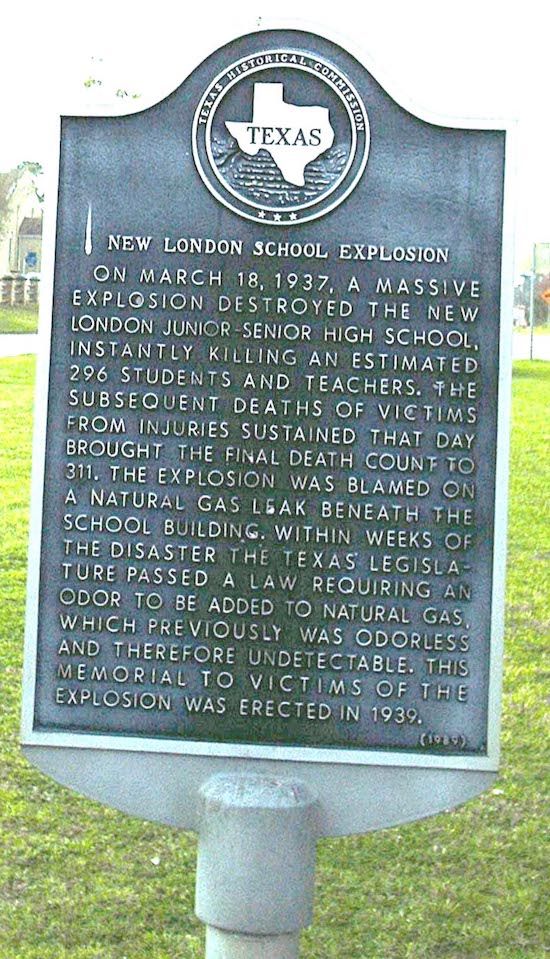

In 1937, school, town and oil company officials ignored warnings and agreed to look the other way as their unnecessary shortcuts and reckless indifference endangered a whole generation in a small East Texas town. Yet while the Court of Inquiry identified a series of design, building and operations problems and unheeded warnings, they named no one responsible. They concluded that school officials were just "average individuals, ignorant or indifferent to the need for precautionary measures, where they cannot, in their lack of knowledge, visualize a danger or a hazard." (Court of Inquiry, 1937.)


Today no one can claim that we cannot visualize the danger of our leaky gas infrastructure. Only those willfully blind are indifferent to the photos of explosions and fires in Merrimack Valley, the stories of death, injuries, devastation and trauma, and the system wide long-standing deficiencies such as those detailed in the November 1 USA Today article.


The danger grows by the day.  None of us can ignore the fact that thousands of leaks in Massachusetts communities have gone unrepaired for years while the utility companies charge customers millions of dollars for the lost gas.  


We have learned that old records and maps of the pipes and turn-off valves, if they exist, can be dangerously misleading and inaccurate. And many repairs do not stop the leaks. Even after ruptures and explosions are repaired, as in Prince George BC and in Merrimack Valley, the supply can be unreliable for a long time.


The truth is that, even if the utility companies had enough money to replace all the pipes, which they don’t, there are not enough field inspectors to oversee the quality of pipeline work. They do not have enough qualified personnel to do the work yet they continue to lock out experienced union gas workers. Nor are Governor Baker’s appointments to the Department of Public Utilities diligent in their oversight of the utility companies. The danger is heightened by state and federal safety regulations and standards that vary widely and often are not enforced.


No More Willful Blindness. The 1937 disaster resulted in a law requiring adding mercaptan as a warning odor to natural gas. As a result, in our own neighborhoods, we can smell the sulphurous “rotten eggs” when we walk our children to school or take our dogs around the block or go out to pick up the newspaper. Sometimes the odor is so strong we can smell the gas as we drive by, especially where holes have been drilled in the street pavement to vent the fumes instead of fixing a leak.


Inspirational Leadership. The growing grassroots organization Mothers Out Front has become a bold public advocate for policies and standards that respond to the threats of climate change and for accountability from government and corporate officials.


Breaking the silence. Rooted in a shared sense of unquenchable responsibility, Mothers Out Front state and community teams have built partnerships to fight for improved maintenance of the aging gas distribution system and to expose the health impacts of fracked gas all along the supply chain. Their ultimate goal is a swift complete and just transition away from fossil fuels and toward a future based on clean and renewable energy.


Mothers Out Front Newton applauds Newton Mayor Ruthanne Fuller and City Councilors who have taken an honest clear eyed look at the dangerous condition of our aging gas pipelines and the inadequacy of the gas companies’ operations. Their October 30 letter calls on Governor Baker and the MA Department of Public Utilities to live up to their statutory responsibility and act immediately to safeguard our community.


Use Less, Green the Rest. Mothers Out Front Newton is grateful to our City officials for speaking up for the safety and sustainability of our community and taking meaningful steps to promote clean renewable energy and energy efficiency in City programs and policies.

Lessons Learned. Indeed, we can all visualize a livable future and must take responsibility for achieving it.
~~~~~


Newton Pushes Governor On Gas Regulation After Merrimack Valley, 'We count on you to protect us from the risks associated with the use of natural gas,' say the Newton Mayor and City Councilors in a letter. Nov 1, 2018.

February 21, 2018

HEALTHY KIDS HEROES 2018

Healthy Kids Heroes 2018: Speaking Up for Safety

Every year, to mark the anniversary of the 1937 Texas School Explosion, I salute inspirational leaders who demonstrate an extraordinary sense of responsibility and commitment to the safety of children and their communities. 

The Healthy Kids Hero Award was created as an annual opportunity to remember the 1937 tragedy — a gas explosion that killed more than 300 people, mostly students, in their new state-of-the-art public school
where no expense had been spared except when it came to safety.

One lesson of the 1937 tragedy is that a safe quality environment depends on champions dedicated to making safety and health a priority.

For 2018, there are three heroes. Each is known for effective advocacy and professionalism, the ability to inspire others, and especially for being compassionate, genuine and kind.

Their work illustrates the power of allies who share a sense of personal responsibility and purpose. They each contribute countless hours of professional and personal time as resources and mentors to their communities and colleagues.
  • IPM is a Team Effort  Kathy Murray is Integrated Pest Management (IPM) Specialist at the Maine Department of Agriculture, Conservation and Forestry. 

"...TO MAKE EVERY CHILD FEEL SAFE EVERY DAY."

Born and raised in Everett. Mr. John Obremski has worked in the Everett school district for 25 years, the last two years as Principal at Lafayette Elementary, a K-8 school with 950 students. He brought his previous school up from Level 3 (probationary status) to Level 1 (excellent). With his wife Jennifer, who is a grade one teacher, John has dedicated his life to supporting and advocating for children in public schools. He also serves on the school committee in Melrose Massachusetts.

A Culture of Compassion

Everett Superintendent Fred Foresteire writes,
“John has spent over 20 years in education as a teacher, guidance counselor, assistant principal and 11 years as a principal. Early in his career as an administrator he learned one of his students had a food allergy. Mr Obremski made it part of his mission to make certain that the student did not feel out of place at school.”
“He believes in teaching the Whole Child. His building has a thriving art and music program. His expertise in budget building and grant writing has brought millions of dollars to the district to support afterschool programs and healthy activities for students and professional development for staff. 
He wrote a children’s book, The Walking School Bus” to inspire children to walk to school in groups as part of his healthy living approach to education. 
If you ever want to find Mr Obremski, just look for children because that’s where this champion will be. “
Students meet at different locations and walk to school together. They play music outside and give out book marks and bracelets when they get there." --Eleanor Gayhart 

Health and Wellness = A Safe School Culture

Linda Sala has been active in the Lafayette Parent Teacher Organization since 2005 and is now PTO President. She says,
“Mr. Obremski gives his all for the kids, 110%. It is only his second year at the school and he knows all the kids. He is adamant about not taking any chances with kids’ safety. He has amazing relationships with the kids, parents and staff. His door is always open to every parent. His priorities are the kids’ health and wellness and their social emotional development.”
“Mr Obremski is very sincere, compassionate, and understanding. He can relate to everyone. He believes school needs to fun. He gets involved in every event. The school is very clean, well kept. The kitchen is spotless. Bathrooms are clean. Every other summer they repaint. They do a very good job on air quality.”
“He started a monthly program, Caught in the Act, that recognizes three students who show acts of kindness. In a short period of time, he has improved programs for the whole school. He has brought in sports, yoga and exercise as part of the Health and Wellness program. He has also provided up to date technology. Kids in grades 3, 4, and 5 got iPads. And he is very concerned about kids with allergies.”
As part of the school’s Health and Wellness Committee Obremski has emphasized healthy snacks. No outside food. No cupcakes or candy. He creates alternatives that the kids enjoy such as field days and in-school field trips. Students are rewarded for their achievements with stickers and privileges instead of candy.
​​At the Homecoming Parade 2017 
Assistant Principal William Donohue, 
Evelyn Gayhart, Principal Obremski
The school provides all students with a free breakfast and lunch. Obremski recognized that the large cafeteria could be intimidating to some younger students so he decided to serve breakfast in the classroom. He increased the number of students eating breakfast from 300 to 800.

In response to seeing a remarkable increase in the number of students with allergies, Obremski made new rules starting on his first day at Lafayette. Parents no longer send in outside food for class parties. Now children enjoy doing crafts, dancing, listening to a parent read a book, in-school field trips or outside games. For teachers, it reduces the stress of constant vigilance by limiting food in the classroom.

Inclusion Based on the Friendship Model  

Like Principal Obremski, many of the teachers grew up in the community. He says there is a deep feeling of home, of collaboration, of purpose, of paying it forward. The school serves over 200 students with Individual Education Plans. It is a multicultural community. Many students are learning English as a second language. The teachers pride themselves in relationship building with students and parents. They use a “friendship model” to include all students.

Obremski says his mission is to make every child feel safe everyday. ”I believe that schools should be one of the safest places on earth.” 

January 31, 2016

2016 Healthy Kids Heroeswww.healthy-kids.info logo.jpg

Every year, to mark the anniversary of the March 18, 1937 Texas School Explosion, I salute inspiring individuals who show extraordinary responsibility and inspirational leadership for school and community safety. They live and work by a standard of excellence and integrity — often in the face of denial, willful blindness, and indifference about hazards and unsafe conditions.


One lesson of the 1937 tragedy is that a safe quality environment depends on champions with an exceptional sense of responsibility. Another lesson is that we can’t take it for granted that local officials or elected representatives make community safety or health a priority. 

These four Heroes are inspiring for a combination of personal qualities and qualifications beyond credentials. Each, in his or her own way, promotes the values that build and continuously strengthen a culture of responsibility for safety and continuous improvement.
Rick Reibstein.jpeg

Todd and Rick are heroes because both have dedicated their lives and long careers to helping people make good decisions to prevent pollution and reduce environmental hazards in schools, workplaces and communities. As public agency officials, educators, mentors, and consultants, they have been innovative problem solvers in a variety of business, private, government and academic settings. They are experts at building relationships and trust with clients and communities.  
 JanePaddlingTrash.jpg
Jane Winn is a grassroots leader gifted at building community power to oppose pollution and advance sustainability. 

FB_IMG_1450830313189.jpg
Brooke Leifer is an inspiring young woman dedicated to using music to inspire people “to make the world a better place, a special place, a healthy place, to stop pollution."
Rick Reibstein, Prevention First

Rick Reibstein is a life-long pollution prevention champion promoting innovation and transformation.

Rick is on the Faculty of Harvard Extension School and a Lecturer in Environmental Law at Boston University where he is the co-creator of the Regulated Community Compliance Project (RCCP). RCCP focuses on the relationship between government and the regulated community. It has provided training for over 3,000 real estate professionals on the lead disclosure rule and related regulations.
 
Protection Starts with Prevention

From 1989 to June 2015, Rick was a Senior Environmental Analyst at the Office of Technical Assistance (OTA) in the Massachusetts Executive Office of Environmental Affairs. OTA provides free confidential on-site technical assistance to manufacturers, businesses and institutions to reduce the use of toxic chemicals, energy and water.


OTA was created by the 1989 Toxics Use Reduction Act.  “In my opinion the Massachusetts Toxics Use Reduction Act is the best environmental law ever passed,” says Rick. “It created the Toxics Use Reduction Institute at UMass/Lowell and its sister, the Office of Technical Assistance (OTA).

Persistent Assistance and Willing Compliance

Rick believes that typical agency enforcement, while necessary, creates an adversarial relationship. At OTA, Rick practiced persistent assistance, a strategic approach to helping businesses and communities learn about the laws and reduce hazards by identifying opportunities to adopt safer materials and processes that cost less to use and manage.

The Source Reduction Model of Inquiry

Rick was among the first in the country to do on-site visits for pollution prevention, emphasizing  the importance of helping companies find the best, most efficient environmental options without telling them what to do.  “As I worked with companies, I learned I just needed to ask questions, not prescribe solutions.“

He focused on educating, training and demonstrating alternative technologies. He promoted the benefits of the “practice of compliance” with regulations and meeting standards set by such laws as the Clean Water Act, The Clean Air Act, and rules for hazardous waste management.  He taught that source reduction and other pollution prevention strategies avoided costs, reduced liability, avoided fees and penalties.

High Rates of Willing Compliance

By helping companies and communities to feel safe about reaching out and helping them meet regulations and standards Rick and his co-workers achieved high rates of willing compliance. Compliance rates increased more than 50%. “It was proof that a government program can have great results.”

OTA has worked quietly with about 2000 companies who voluntarily sought OTA assistance and site visits. In contrast with enforcement which often achieves minimum change, Rick calls OTA’s approach “relational environmental governance,” building relationships and trust. A former Secretary of Environmental Affairs called OTA the “state’s best kept secret, the crown jewel of government."

In Good Company

Rick is grateful to OTA’s first director, Barbara Kelley, for her vision of working collaboratively with the regulated community. Others, such as former Commissioner of the Department of Environmental Management Jim Gutensohn and division director Michael Brown, deserve recognition for prompting the new approach. There was also Ken Geiser, creator of the Toxics Use Reduction Act, Lee Dane, who oversaw the first assistance pilot program, and consultant Robert Pojasek, a pioneer in pollution prevention, who helped Rick understand how to do the work.

Childhood Values

“Being taken on hikes in the Catskills and New Hampshire as a child made me want to be in nature. I came back to school drawing pictures of mountains and trees.  My friends drew pictures of warplanes, ships and battles."

“My mother was an inspiration to me. She worked for the city of New York and did policy research and economic analysis. She predicted that the policy of deinstitutionalizing mental patients would lead to many homeless in the streets. She was right. She worked for years to get the city to recognize that it was not getting its full medicaid reimbursement. When the story finally broke, it was front page news. She didn’t get public recognition but she made such a big difference.”

His mother’s career gave Rick an appreciation and tolerance for the challenges of public service.  “I cared that she won the respect of all her co-workers and did work of excellence and impact.”

He saw that doing the kind of work that helps people and communities is tremendously satisfying and that leading an ethical life is a source of “happiness. The other motivating force was my mother getting cancer, her sisters dying of cancer, and others around me having cancer.”  

Education for Innovation and Transformation

Rick attended Hampshire College with an interest in science and art. He made sculpture out of waste metal. He changed to a focus on the environment, energy and transportations systems. He researched alternatives to nuclear power and fossil fuels, and how to influence attitudes to prompt change. He graduated with a degree in “Creative Writing in the Public Policy of Science.”

Rick got his JD at Brooklyn Law School. In 1979 he was inspired by hearing a young Amory Lovins, cofounder of the Rocky Mountain Institute (www.rmi.org), whose talk on the “Soft Path” went up against a group of highly respected authorities and was entirely convincing.

Breaking the Silence

Rick’s first  job in government was in the state budget office reviewing environmental programs. Next he investigated PCBs in public buildings such as prisons and community colleges. He found serious problems and wrote a report directing attention to violations of environmental rules in state facilities.

He pointed out that the federal Toxic Substances Control Act required immediate public notification and containment. It shook people up. Taking responsibility for the condition of state buildings was an uncomfortable new idea to engineers and agency administrators. When Michael Dukakis was Governor, there was a heightened awareness of the Commonwealth’s accountability.  

Rick brought the concept of legal compliance to the table.

Rick’s formation of an interagency committee was supported by his supervisor. Members of the Departments of Health, Environmental Protection and Transportation enthusiastically participated. They supported Rick’s report on the need to better manage hazards in state facilities. The Executive Office of Administration and Finance asked how much it would cost to address the environmental impacts of state agencies.

Attorney General Harshbarger forced cleanups under the federal Resource Conservation and Recovery Act (RCRA), the public law for the proper management of hazardous and non-hazardous solid waste. (However, eventually new leadership came in and disbanded the committee.) However, Rick was later able to reestablish a team that provided assistance to state agencies in improving their environmental performance. This has evolved into the Lead by Example Program to address greenhouse gas emission reductions, energy conservation and efficiency, renewable energy, green buildings, and water conservation.


Promoting School Chemical Clean Outs

In 1993, OTA staff and community health agents such as Marina Brock, Barnstable County Environmental Health Specialist, did a series of school visits and discovered a high quantity of hazardous chemicals and unsafe chemical storage in schools.   

They found that school officials were often reluctant to acknowledge the hazards. Rick got a grant from the US EPA to fund an OTA initiated project, Chemical Use Reduction for Indoor Air Schools (CURIAS) (infohouse.p2ric.org/ref/16/15185.pdf). The program linked chemical use to poor indoor air quality and promoted chemical clean outs.  (See “Impediments to Implementing P2 in the Public Schools, Marina Brock, 1994.) 

With the help of Susan Lanza, Rick helped create a unique Mentor Program to match chemistry professionals with schools to clean out chemical stockpiles and set up chemical hygiene programs. Rick also helped form a multi-agency task force on schools create compliance guidelines for a big matrix of indoor air quality and chemical issues.

As an example of what schools can do to improve safety, Rick will never forget what he learned from Monona Rossol,  industrial hygienist and President of Arts, Crafts & Theater Safety, Inc.,. “Don’t just look at general ventilation rates. Ask if the airflow is bringing chemicals into the breathing zone.”

Later, Rick launched programs for environmentally preferable purchasing and trainings for schools, hospitals, and business networks. He received a US EPA grant for OTA to work with regional planning agencies and fire departments on preventive hazards management.
In 2010, RICK created the Massachusetts School Sustainability Coordinators Roundtable  to honor and encourage student volunteers whom he had worked with on greenhouse gas calculations and other campus projects.  He organized the Spring Convocation of Students Working with Sustainability Coordinators.

He also was a founder of the Business Environmental Networks and the National Electronic Products Recovery and Recycling Roundtable that prompted a national effort to address electronic waste. He is a former editor of Hazardous Materials Intelligence Report and the creator and editor of Radiation Events Monitor.
Rick Reibstein.jpeg

Rick was declared a “P2 Champion” of 2015 by the National Pollution Prevention Roundtable (NPPR), the premiere group for pollution prevention (P2) professionals. Rick is on the board of the National Pollution Prevention Roundtable where he has advocated for addressing Toxics in Schools. Photo by Department of Earth & Environment.

January 10, 2016

Early Warnings, Late Lessons 

One lesson of the 1937 School Explosion story is that we can’t take it for granted that local officials and elected representatives make community safety or health a priority.

Lessons Lost, Cutting Costs. 
Flint, Michigan 2016

The poisoning of Flint’s water supply is another sad illustration of what happens when cutting costs comes before protecting the public. 


To save money, the Governor's appointed city manager switched the public water supply to the long-polluted Flint River rather than from Detroit’s system. But the river’s water was high in salt, which helped corrode Flint’s aging pipes, leaching high amounts of lead into the water supply. Months of a poisoned water supply has caused serious acute, ongoing and long term damage to the residents, especially brain damage to the lead poisoned children. 

To make matters worse, officials knew that the water was bad but there was denial and dismissal of residents concerns for over a year. More:  What Did the Governor Know About Flint's Water, and When Did He Know It? The Atlantic, January 9, 2016
  
Bad Decisions, Broken Promises: A Timeline of the Flint Water Crisis
ABC News, Timeline of the Water Crisis

Failures to follow law caused Flint water crisis

__________________________

Lessons Lost, Cutting Costs.  
New London TX 1937

March 18, 1937, a gas explosion killed more than 300 students, teachers and visitors while they were in the supposed safe haven of a new state-of-the-art public school. 

To save money the school board substituted a gas system for the steam system. They had ignored the architects' warnings that the building had not been designed to vent gas fumes. Then, the school board decided to hook-up to a free residue gas line while school and oil company officials agreed to look the other way.

An inquiry into the disaster reported other design, building and operations problems and unheeded warnings. Even though the gas had no odor, there were reports that students had headaches and burning eyes from gas fumes in their classrooms. One account describes students sitting in a classroom with jackets on and windows open to vent the fumes.

On March 18, thirteen minutes before school dismissal, a shop teacher flipped a switch to turn on a power sander and a spark set off a gas explosion.


Following the disaster, a law was passed required an odor in natural gas. Other recommended school safety measures have yet to be implemented in most communities.

Read more: The Unfinished Legacy: What was the 1937 Texas School Explosion?