Showing posts with label students. Show all posts

January 30, 2014


Burnaby teachers raising pipeline concerns

The Burnaby Teachers' Association is raising concerns that the new Kinder Morgan oil pipeline will run close to even more local schools.

The teachers' association is opposed to the pipeline expansion and has joined a growing number of applicants hoping to intervene in the National Energy Board's upcoming hearing for the project.

"The concern is if there is a pipeline rupture ­– and it's inevitable there will be, we just don't know how bad it's going to be – our members, as far as we know, haven't received any training on how to deal with a pipeline leak," said Patrick Parkes, the association's first vice-president. "A pipeline leak is pretty different from an earthquake or a fire. I don't know what you can do to adequately protect staff and students from airborne issues."

Read article: http://www.burnabynow.com/burnaby-teachers-raising-pipeline-concerns-1.806906

Resources:
The Smalley Foundation is committed to increasing safety and awareness for those who live, work and play near oil-and-gas equipment and pipelines. We do this by empowering the general public, training first responders and partnering with the industry. http://smalleyfnd.org/

Bring the Lessons of 1937 to Your School


January 23, 2013

...children need, first and foremost, to be safe.


Writing about visiting his granddaughter on her first day of kindergarten, Dr. Charles Patterson reflects "on the trust placed in all of us as educators.
... Just as Lauren is precious to our family, millions of the world's children are precious to their families and friends. Those adults are depending on us, as educators, to treat their children with respect, care, and concern, just as we want other adults to show kindness to the children we love so deeply.  Educators should never lose this perspective… children and their well-being as the focus of all we do."   (“Message from the President” in Education Update, ASCD, 1995.)
In an interview Dr. Patterson said that he was well aware of the New London School Disaster. 
“It is the most terrible example of the price to be paid when adults forget that children need, first and foremost, to be safe.  Protecting them from hazards is a primary duty. It is an area that urgently needs an infusion of advocacy.”
-- Dr. Charles Patterson is a former school superintendent of Killeen Independent School District (Texas) and former president of the Association for Supervision and Curriculum Development (ASCD).

Originally posted March 4, 2012
  

January 26, 2012

Successful Strategies for Creating a Culture of Laboratory Safety
by Bryan Connors, M.S., C.I.H., H.E.M.

Felony charges have been filed against the University of California and a University of California, Los Angeles (UCLA) chemistry professor in connection with a laboratory fire that killed a staff research assistant three years ago. The L.A. County district attorney’s office has filed criminal charges against the chemistry professor responsible for the training and supervision of the research assistant, and the regents of the University of California with three counts each of willfully violating occupational health and safety standards, resulting in the research assistant’s death. 

This tragedy has prompted universities and biotech facilities across the nation to scrutinize their own laboratory safety programs to ensure that they are adequately protecting employees from injury. EH&E manages environmental health and safety (EH&S) programs for several large research institutions in Boston and Cambridge, MA and understands these concerns. Similar incidents reported by the media have driven our staff to conduct internal reviews of our own programs to identify vulnerabilities and make improvements. This article offers insights from our internal reviews and resulting efforts on strategies we’ve found to be successful at improving safety program performance...

Continue reading here

 
~ ~ ~ ~ ~ ~ ~ ~
Environmental Health and Engineering Webinar
Best Practice Strategies for Laboratory Safety Programs 
2/7/12 EST   Pice: $0.00

Learn best practices and proven strategies for implementing, maximizing, and tracking the effectiveness of lab safety management programs. 


Registration Deadline:  2/7/2012 10:00:00 AM 


March 18, 2011

2011 Healthy Schools Hero Dr. Dwight Peavey


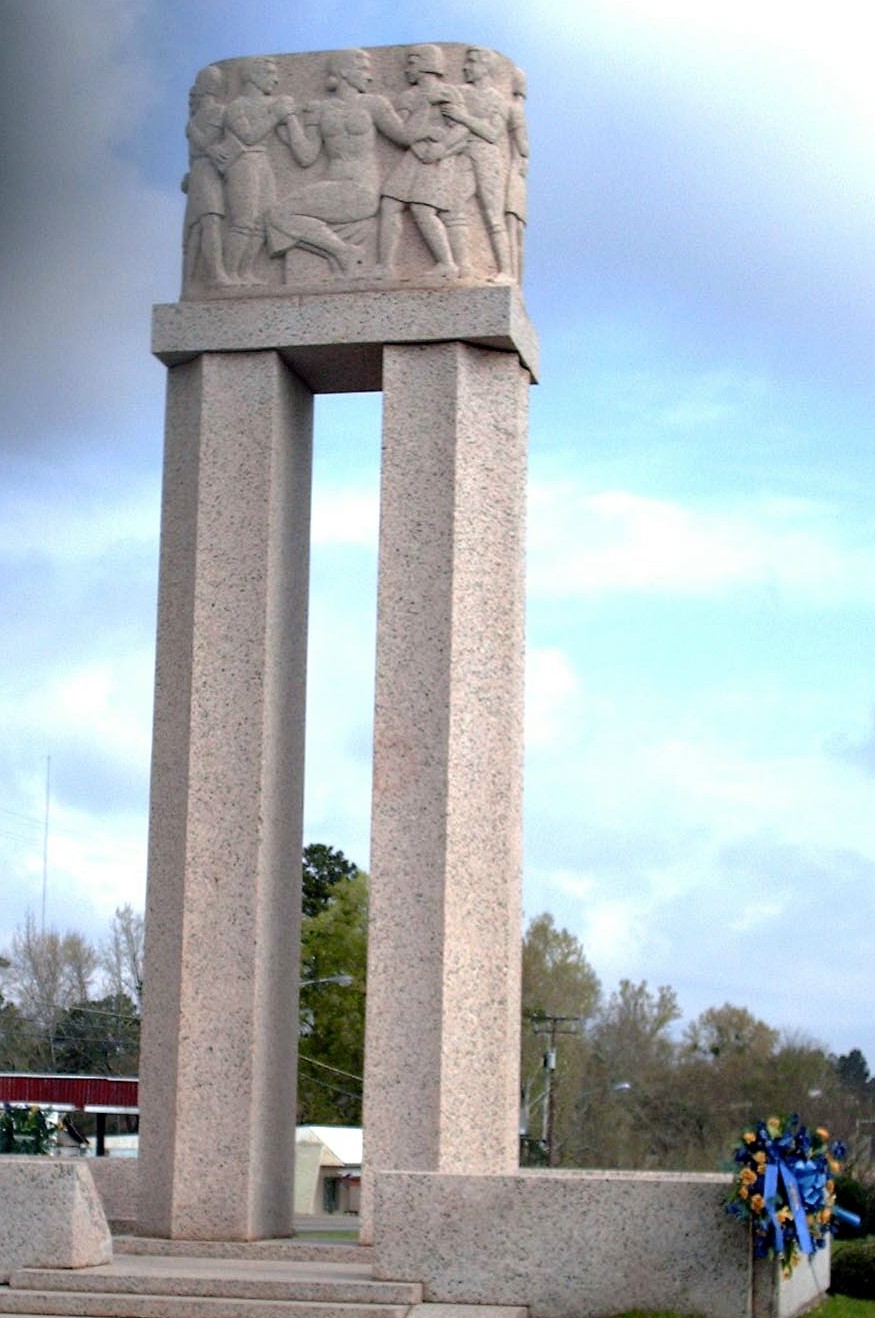
Every year, to mark the anniversary of the March 18, 1937 Texas School Explosion, I salute a Healthy Schools Hero whose extraordinary responsibility and inspirational leadership is dedicated to eliminating explosives and other chemical hazards and unhealthy conditions in schools.  

The March 18 Healthy Schools Hero Award is an annual call to tell the story of the worst school disaster in American history as a case study and cautionary tale.  By example, each Hero is an inspiration to break the silence about school hazards and bring the Lessons of the 1937 Texas School Explosion to today’s schools.  

The 1937 story needs telling because the decision-making and false economies that led to the 1937 explosion are too common in schools today.  We have widespread school design, building and operations problems, warnings are unheeded, no one takes responsible for safety, and explosives and other hazardous materials and unhealthy conditions in labs, classrooms, closets and storerooms are routinely ignored.  

The 1937 explosion resulted in a law that required adding a warning odor to natural gas thus saving millions of lives all over the world.  However, other important recommendations of the 1937 Court of Inquiry have yet to be used so that schools are teaching safely and teaching safety to students in 21st century schools.    

March 04, 2011

Save the Gummy Bears, Save the World

gummiesAmy Cannon writes: I recently received an e-mail with a link to an article that had the title “Chemistry class explosion injures seven.” I was hesitant to open it, worried about what disaster I would find inside, but did anyway. The article was about a local chemistry teacher who was demonstrating a reaction between potassium chlorate and “food” when the reaction went “awry” and exploded upon her and seven students. Luckily there were no life threatening injuries, just minor cuts and burns. But, despite these “minor injuries”, my mind still went to that classroom on that day...read more

Amy Cannon, is Co-Founder and Executive Director of Beyond Benign, a non-profit organization that promotes sustainable science in order to create an environmentally, socially and economically prosperous world. http://www.beyondbenign.org

January 28, 2011

Lessons of the Challenger Disaster


Keeping quiet about a problem can lead to disastrous consequences. Study these lessons. Break the silence.
As many safety heroes know, it often takes enormous persistence and courage to take leadership for safety...and overcome indifference to a wide range of health and safety issues.  See Feed Your Heroic Imagination
Deadly space lessons go unheeded  Apollo 1, Challenger, Columbia tragedies have much in common, By James Oberg NBC News space analyst  ..."But the internal hazards -- what investigation boards have called the "flawed safety culture" -- have proven much more insidious. This is the realm of convenient assumptions, of complacency, of willfulness, of use of statistical superstitions, of a false familiarity with an unblinking foe. It is a culture made possible by an all-too-human aversion to facing unpleasantness. It has become easy to look away from these horrible space disasters -- and I never call them "accidents," a term that relieves the people involved on the ground of ultimate responsibility.

See Eliminating Cultures of Silence  "Sadly, before each disaster, stake holders saw clear warning signs for catastrophe and yet they said nothing. Trends show that similar cultures of silence proliferate in organizations across the country....The good news is that organizations who successfully handle these five issues transform cultures of silence into cultures of honesty and effective communication—eliminating potential catastrophes and saving lives."

Teachers who enforce safety rules not only avoid accidents in school but they give their students the skills and attitudes necessary to safeguard their future families and co-workers and "to live safer healthier longer lives."  (Jim Kaufman, Lab Safety Institute

... Silence begets silence. The bigger the silence, the more powerful it is. Silence can become so  all-encompassing that one is not even aware of it.  In such instances, entire constellations of thoughts, questions and conversations simply do not arise.  Or, if they do, the pervasiveness of the silence makes them seem dangerous. Perhaps the last person who tried to break the silence got in trouble, perhaps she became a pariah, perhaps she lost her job. --  Beyond Erin Brockovitch By Sonja Biorn-Hansen, in Rachel's Environment & Health News #815, http://www.rachel.org/?q=en/node/6438.  Sonja Biorn-Hansen an Environmental Engineer with the Oregon Department of Environmental Quality.

"...those normally charged with protecting a school from liability (and its occupants from harm), ...may not be familiar with the scope of the risks. Too often, people with only a cursory understanding of the issues will consider themselves experts. Familiarity may also be surprisingly limited among those to whom a school generally turns for advice on health issues, such as school nurses, industrial hygienists, HVAC companies, consulting firms and health departments ...More often than not, they will under-emphasize the risks and over-emphasize the costs (and the inconveniences) of responding to a perceived problem."  "Legal Aspects of Pollution in Schools," Earon Davis, The Healthy School Handbook, National Education Association, 1995.

Press Release: New Data Shows Schools Ignore Children's Health: Groups Urge Action by EPA and States    Healthy Schools Network Executive Director Claire Barnett warns, “Parents are stunned when they discover schools have known about environmental factors affecting their child and have done little or nothing. Then they learn that no agency responds either. Every effort should be made to intervene when children are in harm’s way.”


January 25, 2011

Chemistry of everyday things


The IYC 2011 will be a year-long celebration in which anyone can participate. You can coordinate an activity, engage in a project, or simply share an idea. Join in now and become part of something special.
    •    http://www.chemistry2011.org/
    •    http://iyc2011.acs.org/
    •    http://www.nbclearn.com/chemistrychapters


'Chemistry Now' Video Series Brings Science to Students


    April 03, 2010

    What is Responsible Chemical Management?

    Responsible chemical management involves taking steps to ensure chemicals in schools do not endanger students and school personnel.
    – Evaluating chemicals for need, quantity, and appropriateness;
    – Properly labeling,storing,and securing chemicals; and
    – Safely disposing of waste and/or excess chemicals.
    from Healthy Schools School Chemical Cleanout Webinar -
    Matthew Langenfeld USEPA Region 8 303-312-6284
    http://peakstoprairies.org/library/webinars/2010_healthy-safe-schools/SchoolChemicalCleanoutWebinarJan12.pdf

    March 11, 2010

    COLD MORNING, 1937 and Memory Book

    COLD MORNING, 1937

    The night of the disaster, no one slept.
    Sirens ripped the darkness with doom.
    Dogs howled back. After the bodies
    were found, we tried sleep,
    stared at the ceiling, fixed by memories
    we could never escape or soon describe.

    Exhaustion loosened our grip on consciousness,
    we slipped into a dark pool, lay floating
    face down below the surface, until
    the gray pool merged with gray dawn.

    We rose, forcing our leaden feet
    to the terrible task: caskets, the unctuous
    minister, the exhausted emergency worker.

    In a garage beside the mortuary,
    makeshift tables held the remnants of lives,
    shrouded in bloody sheets.

    Rituals were omitted.  No neighbors stood
    in doorways bearing plates of cake.
    Those not bereaved avoided our eyes,
    terrible as gorgons.

    Yesterday's March morning warmed
    to the trills of mockingbirds. Gulf breezes
    rushing inland tossed new bluebonnets.
    Today is a cottonmouth under a cold stone.

    -- Carolyn Jones Frei


    MEMORY BOOK

    One muggy afternoon the students sat
    for their last school pictures.  In the air
    from the photographer's fan
    the children's hair blows to the left.

    When I open the Memory Book,
    dead schoolmates assume weight,
    dimension.  The faculty comes first
    in death, knowing, dignified,
    The school secretary wears a secret
    smile, planning the wedding
    that never came. Seniors parade
    in caps and gowns, diplomas
    never signed.  On the yellowing
    pages for primary school, wisps
    of hair slip from clips and ribbons,
    bangs hang unevenly.

    The names are regional: Iva Jo,
    Sybil, Glendell, Lataine. Boys in
    their fathers ties never inherited
    their names. From freckled faces
    clear eyes gaze, searching fate
    in the camera's lens, composing
    historic ovals memorized
    by grieving parents.

    Billy wears his skullcap, chin up,
    feisty as always. Tall Ollie is shy.
    The twins are separate on the page,
    though never in life or death. The best
    dressed girl wears her best dress.

    They know the final mystery.
    But we who survive memorialize
    the pain, the loss of trust, another
    slaughter of the innocents.

    -- Carolyn Jones Frei